
Blog
Category: Productivity
The ROI of Precision: Why Clock Session is the Engine of the 2026 High-Performance Team
Moving Beyond Basic Timers to High-Fidelity Data—How “True Time Measuring” Powers Growth and Fairness In the fast-paced economy of April 2026, time is no longer just a resource; it is a Strategic Asset. But for many businesses, time remains a “leaky bucket.” Research shows that teams without a precision measuring system lose up to 20% of their billable potential to unrecorded tasks, meeting overruns, and administrative “drift.” Clock Session was built to plug those leaks. It doesn’t just “track time”; it provides Time Intelligence. By turning raw hours into actionable data, it empowers professionals to own their schedules and leaders to make decisions based on facts, not “gut feelings.” The Power of “Session-Based” Accuracy Most tracking apps treat the workday like a single, blurred block. Clock Session introduces the Session-Based Workflow. By allowing users to start and stop high-fidelity sessions for specific tasks, it creates a “Digital Receipt” of work. This isn’t about micromanagement; it’s about Validation. When a designer or developer can show exactly how much deep-focus time went into a “Quick Revision,” it changes the conversation from “Why is this late?” to “How can we optimize our resources?” Eliminating “Billing Friction” with Radical Transparency For agencies and freelancers, the end-of-month invoice is often a source of stress. In 2026, clients demand more than a flat fee; they want to see the Effort Journey. Clock Session’s reporting features allow exporting granular, professional logs that prove exactly where every minute was spent. This transparency creates Trust Velocity. When clients see the precision of data on ClockSession.com, they don’t question the bill—they value the partnership. “Focus Protection”: Measuring the Cost of Interruption The biggest productivity killer in 2026 is the Context-Switching Tax. It takes an average of 23 minutes to regain focus after a single Slack ping. Clock Session helps measure this “Shadow Time.” By reviewing session logs, teams can identify “Interruption Hotspots.” If data shows that afternoon sessions are consistently shorter and more fragmented than morning blocks, there’s proof to implement “Focus Hours” or “No-Meeting Windows.” Clock Session provides the data-backed authority to protect a team’s most valuable asset: their Concentration. Predictive Intelligence: Bidding with Confidence Many projects go over budget because they are planned using “Guesstimates.” Clock Session provides a historical Effort Repository. By analyzing how many hours similar tasks actually took in the past, teams can bid on new projects with 95% accuracy. ClockSession.com turns past work into future competitive advantage, ensuring that margins stay healthy and deadlines stay met. The Final Word In 2026, it’s impossible to manage what isn’t measured. Clock Session is more than a tool; it’s a commitment to excellence, transparency, and the high-value use of human potential. Stop guessing. Start measuring. Own your impact. Experience the future of productivity at www.clocksession.com.
The 2.9 Session Deficit: Why Your Team is Busy But Falling Behind in 2026
Moving from “Hours Logged” to “Session Density”- The New Metric for Project Success We are moving beyond the basic ‘start-stop’ clock. In 2026, the leading cause of project failure isn’t a lack of hours—it’s Focus Fragmentation. This post positions Clock Session as the essential tool for measuring Session Density, helping teams distinguish between ‘being online’ and ‘being effective.’ As we cross into the second quarter of 2026, a sobering statistic has emerged from global workforce reports: the average professional now gets only 2.9 deep work sessions per week, despite needing at least 4.2 to feel truly productive. This ‘Focus Deficit’ is the hidden reason why projects are stalling even when teams are working overtime. The problem isn’t that people aren’t working; it’s that their time is being ‘shredded.’ In 2026, the companies winning the race are those that have stopped measuring attendance and started measuring Session Density. 1. The Death of the “Shallow Work” Loop In 2026, ‘Shallow Work’—responding to pings, attending status meetings, and administrative shuffling—has become a digital black hole. While these tasks are necessary, they produce zero unique value. Research shows that over 53% of professionals currently get two or fewer deep work sessions a week. Clock Session provides the diagnostic lens to break this loop by categorizing work into Deep vs. Shallow Sessions, allowing leaders to identify structural bottlenecks. 2. Guarding the 90-Minute “Gold Standard” The 2026 productivity gold standard is the 90-minute uninterrupted block. This is the biological ‘sweet spot’ where the human brain enters a flow state. Using Clock Session creates a ‘Social Contract’ for focus. When a team member starts a session, it signals that the time is sacred, leading to increased high-quality output. 3. Predictive Burnout: The “Irregularity” Alert In 2026, burnout happens due to unsustainable work patterns. Clock Session tracks Session Health and identifies irregular work behaviors early. 4. ROI via “Outcome-Based” Metrics The modern C-suite demands Time-to-Impact. Clock Session enables: • Audit Task-to-Time ROI • Eliminate Coordination Tax • Validate Talent Value The Final Verdict If your team is operating in a ‘Deep Work Deficit,’ your business is at risk. 2026 is the year we stop counting minutes and start valuing sessions. Stop the fragmentation. Start the session. Reclaim your team’s focus today at www.clocksession.com.
The 51/49 Split: Is Your Team Actually Working, or Just Talking About Work?
Why Coordination Tax is Killing Your 2026 Margins—and How Time Intelligence Reclaims the ‘Maker’s Schedule’ Introduction In March 2026, a startling reality has hit the C-suite: The “Coordination Tax” has reached an all-time high. A massive study of over 500,000 work hours this year revealed that remote and hybrid professionals now spend 51% of their time in deep work tools and a staggering 49% of their time simply coordinating—emails, Slack pings, and virtual huddles. For every hour your team spends building, they spend nearly another hour talking about what they’re building. For a growing business, this is an unsustainable drain on human capital. The winners of 2026 aren’t the ones with the most meetings; they are the ones using Time Intelligence to tip the scale back toward production. 1. The Hidden Cost of the ‘Always-On’ Culture While 2026 tools like AI-augmented Slack and Microsoft Copilot were supposed to save time, they’ve often created a “Communication Loop.” Workers are now spending 34% of their entire day in communication apps. This “Focus Fragmentation” means that even when a developer or designer is in their “Deep Work” 51%, their cognitive load is still being drained by the 49% coordination tax. This is where Clock Session changes the game. By moving beyond basic “start-stop” timers, ClockSession.com identifies the Coordination-to-Production Ratio. If your lead engineer is spending 60% of their day in “Coordination,” the system alerts you to a structural bottleneck before it leads to a missed milestone. 2. Implementing the ’90-Minute Focus Rule’ The most productive teams in 2026 have abandoned the 8-hour mindset for the 90-Minute Focus Rule. Research shows that human focus naturally decays after 90 minutes of high-intensity cognitive work. Clock Session helps teams implement this by visualizing “Work Blocks.” Instead of a blurred day of multitasking, ClockSession.com encourages users to “Box” their deep work. When a team sees that their collective “Deep Work” blocks are being interrupted by “Quick Syncs,” it provides the data-backed evidence needed to implement No-Meeting Wednesdays or Focus Afternoons. 3. AI: The 22% Deep Work Booster A fascinating trend in the 2026 data is that 22.3% of all deep work now involves AI tools (like ChatGPT and Cursor). AI isn’t replacing the worker; it’s accelerating the “Production” side of the 51/49 split. However, AI only boosts ROI if the time saved is reinvested into more deep work—not more meetings. Clock Session allows managers to see this “AI Reinvestment” in real-time. By tracking how AI tools affect task duration, ClockSession.com helps you measure the actual ROI of your tech stack, ensuring that automation is leading to output, not just more “Coordination” overhead. 4. Moving Toward ‘Trust-Based Transparency’ In 2026, the best talent flees from micromanagement but gravitates toward Evidence-Based Autonomy. High-performers want to prove they are delivering value without being “watched.” Clock Session provides a “Proof-of-Impact” dashboard. It allows employees to show their 51% production streak as a badge of honor. This shifts the manager’s role from “Checking In” to “Clearing Roadblocks.” When the data shows a team is stuck in a coordination loop, the manager doesn’t ask “Why aren’t you working?”—they ask “How can I cut these meetings so you can get back to what matters?” The Final Verdict If your team is stuck in the 51/49 trap, you aren’t just losing time; you’re losing your competitive edge. 2026 is the year we stop valuing “Availability” and start valuing “Architecture.”
The Data-Driven Leader: Why Time Intelligence is the New Competitive Advantage
Moving Beyond “Hours Logged” to Predictive Resource Management and Operational Symmetry In the corporate landscape of 2026, time is no longer just a unit of measurement; it is a strategic asset. While the previous decade focused on how many hours were worked, the current era of ‘Time Intelligence’ focuses on how effectively those hours are converted into market value. For the modern COO, the goal is no longer monitoring—it is Operational Symmetry. As firms scale in a hybrid, AI-augmented world, the lack of visibility into ‘Human Capital’ deployment has become the single biggest threat to project profitability. 1. Eliminating the ‘Planning Fallacy’ with Historical Data The primary cause of project failure in 2026 isn’t a lack of talent; it’s the Planning Fallacy. Organizations consistently underestimate the ‘Actual Effort’ required for complex deliverables. By leveraging Clock Session, leadership teams can finally move from guesswork to precision. By analyzing real-time data on ClockSession.com, project managers can build a ‘Resource Repository.’ This historical data allows for predictive budgeting—ensuring that every bid is profitable and every deadline is met with 95% accuracy. 2. Protecting the ‘Maker’s Schedule’ from Focus Fragmentation The 2026 talent market is fiercely competitive. The number one cause of attrition among high-performers is Focus Fragmentation—the constant interruption by ‘shallow work.’ Clock Session acts as a diagnostic tool for organizational health. It identifies when top engineers or creatives are being pulled into too many meetings or administrative loops. On ClockSession.com, managers get a visual representation of ‘Deep Work’ vs. ‘Fragmented Work,’ allowing them to re-engineer workflows that protect their team’s cognitive energy and prevent burnout. 3. Radical Transparency: The Client Retention Engine Whether you are a global consultancy or a boutique agency, client trust is built on verifiable data. The days of opaque ‘Professional Services’ invoices are gone. Integrating a platform like Clock Session into your client-facing workflow creates a foundation of Radical Transparency. By providing granular, session-based reports, ClockSession.com ensures that the value provided is always visible. This doesn’t just eliminate billing disputes; it positions your firm as a high-integrity partner that respects the client’s investment. 4. ROI via Operational Symmetry Clock Session provides the bridge between time data and financial goals: Scope Creep Alerts: Real-time visibility when ‘quick fixes’ start eating into the project’s bottom line. Utilisation Analysis: Identifying which departments are over-capacity and which are under-leveraged. Profitability Audits: Determining which service lines yield the highest ROI per human-hour invested. The Bottom Line In 2026, you cannot manage what you do not measure. In an economy where margins are thin and speed is everything, Clock Session is the lens that brings your team’s true potential into focus. Stop guessing your way through your project cycles. Master your time, protect your talent, and maximize your ROI. Experience the future of Time Intelligence at www.clocksession.com
How Accurate Time Logs Improve Project Planning
Project planning is the backbone of successful execution. Yet, despite detailed timelines, resource charts, and delivery plans, many projects still run late or exceed budgets. More often than not, the real issue isn’t poor effort or lack of skill—it’s inaccurate time data. When teams rely on rough estimates, memory-based timesheets, or incomplete logs, planning becomes guesswork. This is where accurate time logs play a critical role. With reliable time data, project planning shifts from assumptions to clarity, helping teams deliver consistently and confidently. Tools like Clock Session make this possible by ensuring time logs reflect real work, not approximations. The Hidden Problem Behind Poor Project Planning Most project delays can be traced back to one core issue: planning with inaccurate inputs. Common challenges include: Tasks taking longer than estimated Untracked work like reviews, revisions, and meetings Frequent context switching that isn’t planned for Overloading certain team members without realizing it When time logs are inaccurate or incomplete, project plans become overly optimistic. Over time, this leads to missed deadlines, team burnout, and frustrated stakeholders. Accurate time logs fix this problem at its root. What Do Accurate Time Logs Really Mean? Accurate time logs capture: The exact time spent on tasks When work actually starts and ends Breaks, pauses, and interruptions Consistent data across individuals and teams Unlike manual timesheets filled out at the end of the day or week, accurate logs are recorded in real time or close to it, making them far more reliable. Clock Session simplifies this process by automatically tracking time in a way that aligns with real workflows—reducing human error and effort. How Accurate Time Logs Improve Project Planning Enable Realistic Project Timelines One of the biggest benefits of accurate time logs is the ability to create realistic timelines. When teams know how long tasks actually take: Deadlines are set based on reality, not hope Buffers are added where they’re genuinely needed Dependencies are planned more effectively Over time, project timelines become predictable rather than stressful, helping teams deliver on schedule. Improve Task Estimation for Future Projects Accurate time logs provide historical data that project managers can trust. This data helps teams: Compare planned vs actual time Identify recurring underestimations Improve future project estimates With Clock Session, planners can refer to past projects to build better timelines—reducing surprises and last-minute changes. OptimizeResource Allocation Without accurate time logs, workload distribution often becomes uneven. High performers get overloaded, while others remain underutilized. Time logs reveal: Who is consistently stretched Where capacity exists Which skills are in highest demand This allows managers to allocate resources more fairly, improving productivity and reducing burnout. Prevent Budget Overruns Time and cost are directly linked. When time logs are inaccurate, budgets are almost guaranteed to slip. Accurate time logs help: Track effort against cost in real time Identify scope creep early Adjust budgets before problems escalate By using Clock Session, teams gain visibility into how time impacts costs—making financial planning far more reliable. IdentifyBottlenecks and Inefficiencies Accurate time logs do more than track hours—they highlight where work slows down. They help uncover: Tasks that consistently take longer than expected Repetitive manual work Excessive meetings or interruptions Approval delays Once these bottlenecks are visible, teams can refine processes and plan projects more efficiently. Improve Cross-Team Collaboration Large projects often involve multiple teams working together. Without shared visibility into time usage, coordination becomes difficult. Accurate time logs: Align expectations across teams Improve handoff planning Reduce dependency-related delays Clock Session provides a single source of truth, ensuring everyone works with the same data. Strengthen Accountability Without Micromanagement Accountability works best when it’s built on trust and transparency. Accurate time logs: Clarify responsibilities Show progress objectively Reduce the need for constant follow-ups Instead of micromanaging, managers can rely on data to support decisions—creating a healthier work environment. Why Manual Timesheets Undermine Project Planning Manual time tracking introduces several risks: Forgetting tasks Guessing durations Logging time in bulk Inconsistent entries These small inaccuracies compound over time, leading to flawed planning and poor forecasting. Clock Session eliminates these issues by capturing time consistently and accurately—making planning data dependable. How Clock Session Supports Better Project Planning Clock Session is designed to support teams without adding friction. It helps by: Capturing accurate time logs effortlessly Providing clean, structured reports Supporting planning and forecasting Reducing administrative overhead By aligning time tracking with actual work behavior, Clock Session ensures project plans are built on facts, not assumptions. The Human Impact of Accurate Time Logs Beyond charts and dashboards, accurate time logs improve the human experience of work. They help teams: Avoid unrealistic expectations Reduce last-minute pressure Set fair deadlines Feel recognized for real effort When planning is grounded in reality, teams feel more confident, motivated, and respected. Final Thoughts Successful project planning starts with accurate data—and time logs are one of the most critical inputs. Accurate time logs empower teams to: Plan realistically Allocate resources wisely Control budgets Deliver consistently With tools like Clock Session, time tracking becomes a strategic advantage rather than an administrative task. And when planning improves, projects don’t just get completed—they get completed well.
Why “Productivity Theater” Is on the Rise — And How Smart Tools Can Counter It
In today’s fast-paced work culture, productivity has become more than just a goal — it has become a performance. Employees across industries feel the pressure to appear busy, active, and constantly engaged, even when that activity does not necessarily translate into meaningful results. This trend, popularly known as Productivity Theater, is growing rapidly in modern workplaces, especially in hybrid and remote work setups. But as this trend rises, so does the need for smarter, more transparent tools like Clock Session, which help shift the focus from “looking busy” to “working efficiently.” In this blog, we break down why productivity theater is becoming so common and how intelligent tools can help build a healthier, more result-driven culture. What Is Productivity Theater? Productivity theater refers to the act of performing productivity — doing tasks that look important but don’t actually contribute much to business outcomes. Examples include: Joining every meeting just to be seen Staying online late to appear dedicated Sending frequent updates without real progress Multitasking unnecessarily to appear overloaded Employees do these things not because they are valuable, but because they want to avoid judgment or prove their commitment. Managers, on the other hand, often rely on visible signs of activity instead of tracking actual output. Why Is Productivity Theater on the Rise? Remote Work Misunderstandings With remote and hybrid work becoming the norm, many managers struggle to track employee productivity. This leads to employees feeling the need to “show” they are working by being constantly available, replying instantly, or staying online for long hours. Pressure to Look Busy Modern work culture glorifies hustle and constant activity. Employees fear that if they don’t appear busy, they might look replaceable — even when their real work output is excellent. Overloaded Communication Channels Tools like email, WhatsApp groups, Slack, and Teams create an environment where communication looks like productivity. People end up spending more time “looking involved” than actually completing tasks. Lack of Clear Performance Metrics When companies don’t have transparent productivity indicators, employees are forced to rely on visible activity — something that is easy to perform but not always valuable. Micromanagement Culture Managers who focus on activity instead of outcomes unintentionally encourage productivity theater. Monitoring behavior instead of results leads to fear-driven work habits. How Productivity Theater Affects Businesses While it may appear harmless, productivity theater has long-term negative effects: Low Actual Productivity Employees invest energy in maintaining a façade instead of completing meaningful tasks. Employee Burnout Constantly trying to “look productive” leads to stress, overwork, and mental fatigue. Poor Work Quality When the focus shifts from outcome to appearance, the quality of work naturally drops. Lack of Trust Teams begin to work based on fear — not collaboration or confidence. Wastage of Time and Resources Extra meetings, unnecessary reports, and long hours add no value and cost companies money. How Smart Tools Like Clock Session Can Counter Productivity Theater To reduce productivity theater, organizations need tools that create clarity, transparency, and measurable results. This is where Clock Session helps transform the workflow. Transparent Time Tracking Without Pressure Clock Session lets employees track their work sessions naturally. It doesn’t demand fake activity — it records real tasks, real hours, and real progress. This reduces the need to perform productivity because: employees don’t have to prove they are working managers get a clear view of actual efforts time is documented accurately without manual updates Focus on Results, Not Activity Clock Session allows employees to log tasks, break them into sessions, analyze productivity, and improve focus. This shifts the emphasis from “how busy you look” to “what you accomplished.” Reduces Meeting Overload By offering clear productivity data, Clock Session helps managers understand when meetings are actually needed — and when they’re just a formality. This cuts down time-wasting discussions and frees employees to do meaningful work. Helps Build a Culture of Trust When work progress is visible through smart tracking, managers don’t have to rely on assumptions. They can trust the data, and employees can trust they won’t be judged unfairly. Boosts Efficiency With Smart Insights Clock Session provides: Productivity patterns Work session analysis Focus metrics Improvement suggestions These insights help individuals work smarter, not harder. Eliminates Manual Reporting One of the biggest contributors to productivity theater is the constant need to update someone on your work. Clock Session automates reporting, allowing employees to focus on execution instead of performance. How Organizations Can Reduce Productivity Theater Tools alone cannot solve the issue — culture must also shift. Here’s how companies can reduce productivity theater: Set Clear Output-Based Goals Focus on KPIs, deliverables, and results rather than daily visibility. Encourage Deep Work Remove the pressure of being always online and allow uninterrupted focus time. Avoid Unnecessary Meetings Only hold meetings that have a clear purpose, agenda, and outcome. Promote Trust and Autonomy When employees feel trusted, they stop performing for approval. Use Smart Tools for Transparency Tools like Clock Session bring clarity without forcing employees into performance mode. The Future of Work: Real Productivity Over Performed Productivity As organizations evolve, the focus is shifting toward quality, impact, and consistency, rather than hours spent online or the number of meetings attended. Productivity theater may be rising, but smart, intuitive solutions like Clock Session are helping teams build a culture centered around real performance. By promoting transparency, reducing unnecessary pressure, and supporting mindful work habits, Clock Session is not just preventing productivity theater — it’s helping individuals and teams unlock their genuine potential.
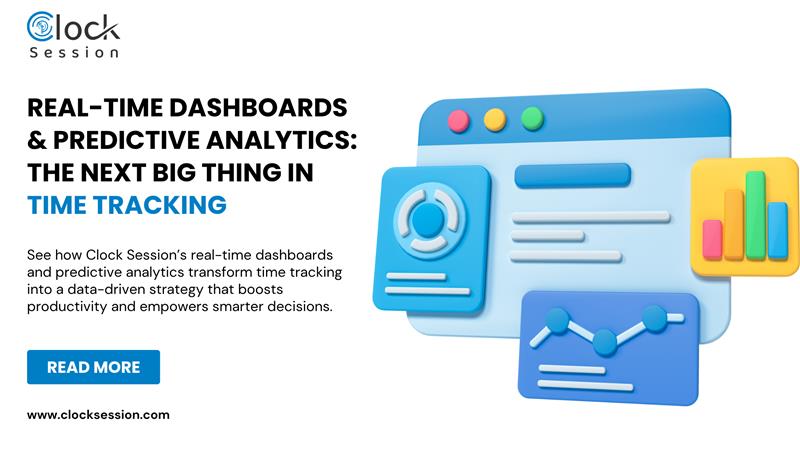
Real-Time Dashboards & Predictive Analytics: The Next Big Thing in Time Tracking
Introduction In today’s fast-paced digital world, where every second counts, time tracking is no longer just about recording hours—it’s about analyzing productivity, predicting trends, and improving efficiency. With the rise of real-time dashboards and predictive analytics, businesses are taking time management to a whole new level. And platforms like Clock Session are leading this transformation, helping organizations make better decisions with data that speaks for itself. The Shift from Traditional to Intelligent Time Tracking Traditional time tracking systems focused mainly on logging work hours and calculating payroll. While these features were useful, they lacked insights into how time was actually being utilized. Modern workplaces need more than timesheets—they need visibility. That’s where real-time dashboards and predictive analytics come in. They not only display what’s happening at the moment but also forecast what’s likely to happen in the future. With tools like Clock Session, businesses can now visualize work patterns, detect inefficiencies, and predict workload trends—all in one place. What Are Real-Time Dashboards in Time Tracking? A real-time dashboard gives an instant snapshot of what’s happening across teams and projects. Instead of waiting for weekly or monthly reports, managers can see live updates on how employees are spending their time, what tasks are pending, and which projects are nearing deadlines. With Clock Session, teams can: Track progress across multiple projects simultaneously Identify productivity peaks and dips throughout the day Visualize performance data in easy-to-read charts and metrics Get instant alerts for potential delays or workload imbalances Real-time dashboards empower both employees and managers to act immediately—making time tracking an ongoing, dynamic process rather than a retrospective one. Predictive Analytics: The Smart Future of Time Tracking If real-time dashboards show what’s happening now, predictive analytics tell you what’s likely to happen next. By analyzing historical data and current performance trends, predictive analytics can forecast outcomes such as project completion times, employee burnout risks, or future productivity levels. Clock Session leverages predictive analytics to provide valuable insights, including: Workload forecasting: Predict which team members might be overloaded or underutilized. Performance trends: Identify top performers and areas that require improvement. Project planning: Estimate timelines more accurately using past data patterns. Efficiency optimization: Detect habits or workflows that affect output negatively. This proactive approach helps organizations plan resources better, reduce stress, and improve employee satisfaction—all while maintaining high productivity. How Clock Session Leads the Way Clock Session isn’t just another time-tracking software—it’s a smart productivity platform designed to align data, people, and performance. Here’s how it stands out: Intuitive Real-Time Dashboards Clock Session’s dashboard presents all key metrics—time logs, project progress, attendance, and productivity scores—in one interactive view. It simplifies complex data into actionable insights. AI-Powered Predictive Insights Using machine learning, Clock Session identifies behavioral patterns and predicts future outcomes, helping managers take preemptive action before small inefficiencies turn into big problems. Customizable Reports Every business is unique, and Clock Session understands that. The platform allows you to customize reports based on specific KPIs, making it easier to track what truly matters. Seamless Integration Whether your team uses project management tools or CRM software, Clock Session integrates smoothly to ensure that all data flows effortlessly, maintaining accuracy and consistency. Employee Empowerment Transparency and feedback loops make employees more accountable and motivated. With visibility into their performance metrics, they can self-correct and improve continuously. Why Real-Time Dashboards and Predictive Analytics Matter Improved Decision-Making: Real-time data ensures that leaders make quick, informed choices backed by evidence, not guesswork. Higher Efficiency: Teams can prioritize better and optimize workflows based on performance insights. Enhanced Accountability: Transparent tracking fosters responsibility and trust within teams. Reduced Burnout: Predictive analytics can detect early signs of fatigue or overload, allowing intervention before productivity drops. Future-Ready Workplaces: As hybrid and remote work models continue to grow, real-time insights help maintain cohesion and efficiency across distributed teams. Practical Benefits for Businesses Implementing real-time dashboards and predictive analytics in your time-tracking strategy leads to measurable benefits: Project Managers can allocate resources smarter and track real-time project health. HR Teams gain insights into attendance, engagement, and employee well-being. Executives can forecast revenue and productivity trends with confidence. Employees can manage their workload better and boost personal productivity. Clock Session ensures that everyone in the organization—from interns to executives—benefits from data-driven clarity. The Future Is Predictive, and the Time Is Now As businesses continue to evolve in the digital era, relying solely on manual or static time tracking will no longer suffice. The combination of real-time dashboards and predictive analytics is setting a new benchmark in workplace productivity. With Clock Session, organizations can go beyond time tracking—they can build smarter, more efficient, and more human-centered workplaces. When time becomes measurable, predictable, and actionable, success becomes inevitable. Conclusion The future of time tracking is intelligent, visual, and predictive. Real-time dashboards empower instant action, while predictive analytics prepare teams for what’s next. Together, they transform data into strategy and hours into results. Clock Session is at the forefront of this evolution—helping businesses unlock the full potential of their workforce. In a world where productivity defines progress, tracking smarter means working better.
Work-Life Balance Starts with Smarter Scheduling – Here’s How
Introduction: Why Balance Feels Impossible Today In today’s fast-paced world, achieving work-life balance often feels like chasing a moving target. The constant juggling between office tasks, deadlines, and personal commitments leaves professionals drained. Studies show that poor scheduling is one of the main reasons people experience burnout, missed deadlines, and reduced productivity. But the truth is simple: work-life balance doesn’t come from working less—it comes from scheduling smarter. That’s where tools like Clock Session step in to transform how you manage your hours, energy, and priorities. The Link Between Scheduling and Balance Most people assume balance is about cutting down hours at work. In reality, it’s about managing your time distribution effectively. Without scheduling: Meetings pile up. Tasks overlap. Personal commitments are pushed aside. On the other hand, with smarter scheduling, you know exactly what needs your attention, when to focus, and when to switch off. This clarity reduces stress and improves overall productivity. Smarter Scheduling: The Foundation of Work-Life Balance So, what exactly is smarter scheduling? It’s not just about filling in a calendar—it’s about aligning your time with your priorities. Tools like Clock Session help you: Allocate time blocks for deep work, meetings, and personal breaks. Avoid overcommitting by having a real view of your bandwidth. Automate task tracking and reporting to free up mental space. Set realistic deadlines and reminders. This approach ensures that neither work nor personal life gets neglected. Practical Ways to Achieve Smarter Scheduling with Clock Session 1. Prioritize Tasks with Clarity Not all tasks carry equal weight. Clock Session’s dashboard helps you categorize tasks by urgency and importance so you can focus on what drives results while leaving time for yourself. 2. Adopt Time-Blocking Instead of multitasking, dedicate specific time slots for work, family, exercise, or rest. For example: 9–11 AM: Deep work (no distractions) 12–1 PM: Lunch & walk 2–4 PM: Meetings 6–8 PM: Family time Clock Session makes time-blocking easy by letting you plan and track blocks visually. 3. Schedule Breaks Like Meetings Breaks are not wasted time—they are recovery time. By scheduling them just like a meeting, you ensure they’re non-negotiable. With Clock Session reminders, you’ll never skip them again. 4. Track Work Hours to Avoid Overload Without tracking, it’s easy to underestimate how much you work. Clock Session provides clear reports so you know when you’re overworking and can adjust your schedule accordingly. 5. Plan Ahead for Flexibility Life is unpredictable. Clock Session allows you to re-adjust your schedule without losing sight of deadlines. This flexibility ensures you can handle emergencies without derailing everything. Benefits of Smarter Scheduling with Clock Session ✅ More Productivity at Work – By focusing on the right tasks, you achieve more in less time. ✅ Reduced Stress – Knowing your priorities and having a clear schedule gives peace of mind. ✅ Better Health – Regular breaks and time for exercise or mindfulness improve physical and mental well-being. ✅ Improved Relationships – Scheduling family and personal time ensures you’re present in important moments. ✅ Sustainable Growth – Startups and teams avoid burnout while maintaining consistent performance. Common Scheduling Mistakes to Avoid Even with the best tools, balance slips when: You underestimate how long tasks take. You say “yes” to everything without checking your bandwidth. You don’t leave buffer time for unexpected tasks. You fail to review your schedule weekly. Clock Session solves these issues by providing data-driven insights, so you make realistic plans instead of guessing. Real-Life Scenario: The Before and After Before Clock Session: Ravi, a startup founder, spends 12–14 hours daily jumping between meetings, emails, and urgent client demands. By the end of the week, he feels exhausted and disconnected from family. After Clock Session: With smarter scheduling, Ravi time-blocks his week. He reserves mornings for strategy, afternoons for meetings, and evenings strictly for personal time. He finishes tasks faster, avoids overload, and still has dinner with his family every night. That’s the difference smarter scheduling makes—it transforms chaos into balance. How Clock Session Makes It Simple Unlike traditional planners or basic to-do lists, Clock Session is built for modern professionals and teams who need more than just reminders. With features like: Smart Time Tracking Visual Dashboards Task Prioritization Customizable Reports Team Collaboration Tools …you don’t just schedule—you create a lifestyle of productivity and balance. Conclusion: Balance is a Choice You Can Schedule Work-life balance is not a luxury—it’s a necessity for long-term health, happiness, and professional success. And it all begins with how you schedule your time. By adopting smarter scheduling through Clock Session, you’re not just organizing tasks—you’re creating room for both your ambitions and your personal life. Because when every minute counts, balance isn’t about working less—it’s about working smart.

How Smart Tools Are Shaping the Future of Work
Introduction In an age where technology drives every facet of professional life, the future of work is no longer a distant concept. It is here, evolving in real time, and smart tools are at the forefront of this transformation. From artificial intelligence and automation to advanced time tracking and employee monitoring software, these technologies are redefining how businesses operate and how employees manage their time. One of the most promising solutions in this space is Clock Session, a smart time tracking and productivity tool designed to help remote and hybrid teams work more efficiently. Understanding Smart Tools Smart tools are technologies designed to enhance productivity, automate repetitive tasks, and provide real-time insights to improve decision-making. These include AI-powered platforms, cloud-based systems, automation tools, and analytics dashboards that simplify operations and enhance workflow visibility. Some key characteristics of smart tools: Automation: They handle routine tasks with minimal human input. Data-Driven: They collect and analyze data to offer actionable insights. Integration-Friendly: They work seamlessly with other software. User-Centric: They prioritize intuitive interfaces and easy usability. Why Smart Tools Matter in Today’s Workplace Remote Work Enablement With the rise of hybrid and remote work models, smart tools have become essential. Employees are no longer confined to office desks. Tools like Clock Session ensure that time is managed effectively regardless of physical location. Enhanced Productivity By automating tasks such as time tracking, report generation, and attendance logs, smart tools reduce administrative burden. Employees can focus on creative and strategic work while systems handle the routine. Better Decision-Making Smart tools provide real-time analytics and reporting features. Managers can see productivity trends, task completion rates, and areas needing improvement, allowing for better resource allocation and workflow optimization. Scalability Whether it’s a startup or a large enterprise, smart tools can scale alongside your business. They are designed to grow with your team, adapt to changing needs, and remain cost-effective. Employee Satisfaction When systems reduce micromanagement and empower employees with tools to self-monitor and improve, job satisfaction increases. Clear goals, measurable outcomes, and autonomy are key drivers of engagement. How Clock Session Is Leading the Way Clock Session is more than a time tracker. It’s an intelligent solution designed for modern teams. Here’s how it contributes to shaping the future of work: 1. AI-Powered Time Management Clock Session uses artificial intelligence to analyze time logs and identify productivity patterns. It helps teams understand how time is spent across tasks and projects, suggesting ways to optimize work hours. 2. Real-Time Insights and Dashboards Managers and team leaders get access to real-time analytics. They can monitor individual and team performance, identify bottlenecks, and make informed decisions based on hard data. 3. Automated Attendance and Activity Logs No more manual clock-ins. Clock Session captures attendance and activity logs automatically, saving time and ensuring accuracy. This transparency builds trust while enhancing accountability. 4. Seamless Integration Clock Session integrates with popular project management and communication tools, offering a centralized view of time, tasks, and productivity. This ensures that teams don’t have to jump between apps to get their work done. 5. Supporting Work-Life Balance Clock Session promotes a healthy work-life balance by alerting users when they’ve been working too long without breaks. This feature helps reduce burnout and encourages a more sustainable work routine. The Broader Impact of Smart Tools on Business Increased Agility With real-time data, businesses can pivot quickly in response to market demands. This agility gives them a competitive edge. Improved Collaboration Smart tools facilitate seamless communication and project tracking, especially in distributed teams. Everyone stays on the same page regardless of time zones. Compliance and Reporting Accurate records of time and tasks help with compliance, audits, and client reporting. Clock Session ensures that businesses stay transparent and accountable. Cost Efficiency Automating routine processes reduces the need for additional administrative staff and minimizes errors, saving both time and money. Preparing for the Future of Work To thrive in the digital era, businesses must adopt a proactive approach. Embracing smart tools is not just about improving efficiency—it’s about staying relevant. Here are a few steps to get started: Evaluate current workflows and identify inefficiencies. Choose smart tools like Clock Session that offer scalable solutions. Train teams to use these tools effectively. Monitor results and adjust strategies based on insights. Final Thoughts The future of work is intelligent, efficient, and empowered by technology. Smart tools are no longer optional; they are critical to success in a fast-paced, remote-friendly, and data-driven world. Platforms like Clock Session offer businesses the opportunity to streamline operations, increase productivity, and enhance employee satisfaction through intelligent time tracking and performance insights. Are you ready to future-proof your workday? Embrace the power of smart tools with Clock Session and lead your team into a more productive tomorrow.

Flexible Work Hours? Here’s How to Keep Productivity High with Clock Session
Introduction In today’s modern work culture, flexible work hours have become more than just a trend — they’re a necessity. With remote and hybrid work models growing rapidly, businesses and employees alike are shifting toward adaptable schedules that promote better work-life balance. But flexibility can sometimes blur boundaries and lead to inconsistent productivity levels. The challenge is clear: how do you stay productive without the traditional 9-to-5 structure? That’s where Clock Session steps in. Designed with AI-powered tools, real-time tracking, and performance insights, Clock Session empowers individuals and teams to thrive in flexible work environments without compromising output. In this blog, we’ll explore how flexible hours impact productivity and share actionable strategies to maintain high performance, all while leveraging the power of Clock Session. The Rise of Flexible Work Hours The global shift to remote work has made flexible scheduling an important part of workplace culture. Employees now have more freedom to choose when they work, often resulting in: Better focus during peak productivity hours Improved mental health and reduced burnout Higher job satisfaction and retention However, without structure and accountability, flexible hours can sometimes lead to: Poor time allocation Missed deadlines Difficulty in team coordination Lack of visibility into progress To overcome these pitfalls, smart tools and disciplined strategies are essential. Why Flexibility Needs Structure While flexibility offers freedom, productivity thrives on structure. Having no fixed schedule can lead to overwork or underperformance if time isn’t properly managed. This is why it’s crucial to implement systems that provide visibility and control—without micromanaging. Clock Session provides this structure through: AI-powered time tracking Project-level visibility Smart reminders and automated alerts Real-time analytics and dashboards These features ensure flexibility does not mean a loss of productivity. Strategies to Stay Productive with Flexible Hours Here are proven ways to stay on track with a flexible schedule: 1. Set Clear Goals and Daily Priorities Start each day with a to-do list and prioritize tasks based on importance. Clock Session allows users to log and monitor tasks, set deadlines, and track progress—ensuring focus on high-impact activities. 2. Track Time to Build Awareness Many remote workers aren’t aware of how they spend their time. With automated tracking features, Clock Session reveals where hours go, helping users adjust their habits and eliminate distractions. 3. Use AI Insights to Optimize Performance Clock Session’s AI engine delivers custom productivity reports. These insights highlight your most productive time slots and suggest ways to improve task efficiency—perfect for customizing your schedule around when you work best. 4. Maintain Consistent Check-ins Flexible work doesn’t mean zero interaction. Use Clock Session’s team monitoring tools to stay in sync, share updates, and maintain accountability—without constant meetings. 5. Automate Repetitive Tasks Automating recurring actions saves time. With Clock Session, you can automate daily reports, notifications, and performance summaries, giving you more time to focus on what truly matters. How Clock Session Empowers Flexible Teams Clock Session is more than just a time-tracking tool—it’s a complete productivity platform built for modern work culture. Here’s how it supports flexible working environments: Custom Schedules: Whether you’re a night owl or an early bird, Clock Session lets you define your working hours without losing tracking precision. Activity Monitoring: Understand how time is spent with detailed activity logs that offer insight without intruding on privacy. Performance Metrics: Use productivity scores and goal-tracking features to motivate performance. Collaboration-Friendly: Managers and teams can coordinate easily, track shared goals, and maintain accountability even across different time zones. Benefits for Teams and Businesses When used effectively, Clock Session ensures that flexible work hours become a business asset. Here’s what teams can achieve: Higher Output: Employees work during their most productive hours, improving overall results. Better Work-Life Balance: Stress and burnout are reduced, leading to long-term engagement. Scalable Monitoring: From freelancers to full teams, Clock Session offers scalable visibility and control. Data-Driven Growth: Managers can make informed decisions based on real-time reports and trends. Tips for Getting Started with Clock Session If you’re new to time-tracking or flexible work models, follow these steps to begin: Create a Profile: Set your preferred working hours, project goals, and notification preferences. Log Your Time Daily: Use automated tracking or manual entries to record time honestly. Review Weekly Reports: Analyze how you’re spending your time and look for patterns. Adjust and Optimize: Use the data to refine your habits, shift your working hours, or streamline your tasks. Final Thoughts Flexible work hours don’t have to come at the cost of productivity. With the right tools and strategies, businesses and individuals can enjoy the best of both worlds—freedom and performance. Clock Session bridges this gap with smart tracking, real-time data, and AI-powered recommendations. In a time when remote and hybrid work is becoming the norm, Clock Session ensures that flexibility works for you, not against you.

How AI-Based Time Tracking Helps Identify Productivity Gaps
Introduction In today’s fast-paced, digital-driven world, maximizing productivity is not just a business goal—it’s a necessity. Organizations constantly seek innovative solutions to monitor employee performance, streamline workflow, and achieve more in less time. One of the most powerful tools making this possible is AI-Based Time Tracking. With intelligent algorithms and data-driven insights, AI-based time tracking solutions like Clock Session are transforming how businesses identify and close productivity gaps. What is AI-Based Time Tracking? AI-Based Time Tracking refers to the use of artificial intelligence to automatically record, analyze, and optimize how time is spent on work-related tasks. Unlike traditional manual systems, AI-powered tools offer automated tracking, real-time data analysis, and actionable insights that help businesses make informed decisions. The Need to Identify Productivity Gaps Productivity gaps occur when there is a discrepancy between expected output and actual performance. These gaps often stem from poor time management, distractions, inefficient workflows, or underutilized talent. Identifying such gaps is crucial for improving team performance, reducing operational costs, and boosting employee engagement. How AI-Based Time Tracking Helps Automated Time Monitoring AI-based tools like Clock Session track time automatically without disrupting the employee’s workflow. This eliminates the guesswork and provides accurate logs of how time is spent, helping managers identify patterns and inefficiencies. Data-Driven Productivity Insights AI algorithms analyze usage patterns, compare them with benchmarks, and flag unusual trends. This provides managers with a detailed overview of where time is being wasted or underutilized, making it easier to spot gaps. Task-Level Analysis AI-based time tracking breaks down time usage by task and project. This enables organizations to determine which tasks consume the most time and whether they deliver proportional value, thus revealing inefficiencies. Real-Time Alerts and Suggestions Some AI systems offer proactive suggestions and alerts when they detect productivity dips. For example, if an employee spends too long on a non-core activity, the tool can recommend a break or suggest refocusing on priority tasks. Employee Performance Analytics AI-driven dashboards provide insights into individual and team performance. By comparing time logs and output, companies can identify top performers, recognize burnout signs, and offer targeted support. Eliminating Manual Errors Manual time entries are prone to errors and manipulation. AI eliminates human bias and error by providing precise, tamper-proof time data. This ensures transparency and fairness in performance evaluation. Integration with Project Management Tools AI-based time tracking often integrates with project management platforms like Trello, Asana, or Jira. This provides a 360-degree view of project timelines, helping managers understand delays and adjust resource allocation accordingly. Workload Optimization AI-based tools help balance workload by identifying when some team members are overworked while others are underutilized. This insight helps optimize task distribution and ensures better resource management. Benefits of Using AI-Based Time Tracking Increased Accountability: Employees become more conscious of how they spend their time. Enhanced Productivity: Pinpointing productivity gaps helps eliminate inefficiencies. Better Project Planning: Real-time data supports more accurate forecasting and project execution. Employee Well-Being: Detecting overwork helps prevent burnout. Informed Decision-Making: Business leaders can base decisions on accurate, up-to-date data. Clock Session: Your AI-Powered Time Tracking Solution Clock Session is a leading AI-based time tracking tool designed to help businesses identify productivity gaps and optimize team performance. With features like real-time tracking, AI-powered analytics, task categorization, and user-friendly dashboards, Clock Session makes time management effortless and insightful. Whether you’re managing a hybrid team, remote employees, or an in-office workforce, Clock Session adapts to your needs. The platform not only tracks time but turns data into actionable strategies, helping you get the most out of every work hour. Conclusion AI-Based Time Tracking is more than just a tool—it’s a strategic asset in today’s performance-driven environment. By uncovering hidden productivity gaps and offering actionable insights, AI-powered solutions like Clock Session empower organizations to work smarter, not harder. Embracing such technologies can lead to more efficient workflows, happier employees, and better business outcomes.

Boost Team Efficiency with AI-Driven Clock Session Features
Introduction The productivity software ecosystem has grown significantly in today’s rapidly evolving digital workspace, where productivity and time management play a crucial role in bridging the gap between your business success and failure. AI-powered employee time tracking tools are among the most powerful solutions for this purpose. And today, we will be talking about Clock Session, the application that is reinventing the way teams spend time, cooperation and get more efficient through its AI-based features. What is Clock Session? Clock Session is a smart AI-based employee hour tracking software to monitor work hours for the team, automate the workflow, and accelerate productivity. From automated time tracking to intelligent productivity analysis, Clock Session is not just a time tracker, it’s an intelligent work management assistant. Why Time Tracking Matters Good time tracking is not about logging every minute of the employee time at the desk. “It’s about seeing how we spend our time, finding bottlenecks and giving teams the ability to make better choices.” In fact, effective time tracking can minimize time-wasted, make sure resources are fully used, and enhance project planning. Key AI-Driven Features of Clock Session 1. Automated Time Logging Forget manual timesheets! Moreover, the Clock Session functionality also makes use of AI to monitor the active hours of working, keep track of the idle time and automatically register the breaks so that the timesheets are constantly accurate and simple. 2. Smart Productivity Insights Clock Session with its AI analytics analyzes work style, focus time, task completion rate, and others to identify productivity metrics and trends. You can identify when an individual needs training and development timing and provide feedback. 3. Real-Time Team Monitoring Clock Session also offers a live dashboard that shows who is working on what, how long people are spending on tasks, and how engaged everyone is. This ensures more transparency and free support. 4. AI-Powered Notifications and Reminders AI algorithms also keep team members on task and prevent procrastination and missed items by sending alerts and reminders based on their schedules and deadlines. 5. Seamless Integration with Work Tools Clock Session integrates with tools you already use such as Slack, Trello, Asana, Google Workspace, etc., making it easy to pick up without interfering with your workflow. 6. Customizable Reports Build detailed reports on time monitoring, absence, job timelines, and a simple click of the button. AI tailored reports based on ovaries, and business needs. How Clock Session Boosts Team Efficiency a. Enhanced Transparency and Accountability Employees become more conscious when they know HR departments intelligently and fairly monitor their hours of work. This transparency is a form of accountability that helps us work (and perform) better. b. Improved Resource Management AI helps monitor the time taken to do each task or project. Such data makes distribution of resources easier for the managers – ensuring no one is either overworked or underutilized. c. Increased Employee Engagement Clock Session’s features, such as real-time feedback and productivity streaks, help keep employees engaged and give them a push to do their best so they can add to overall success for the team. d. Remote Work Optimization Clock Session’s features, such as real-time feedback and productivity streaks, help keep employees engaged and give them a push to do their best so they can add to overall success for the team. e. Reduced Admin Work Clock Session automates time tracking and report generation, liberating HR and team leaders from those time-consuming admin functions and enabling them to dedicate more time to strategic actions. Real-World Application Imagine a remote software development team working across different time zones. With Clock Session, even the project manager is aware of who is active, how the time is being spent on building new features vs fixing bugs, and who at how to work — all of this in real-time. Bigger teams mean quicker development cycles, less slowdown and a more united team. Why Choose Clock Session? AI-Driven Efficiency: Automate the repetitive tracking and gain valuable insights. User-Friendly Interface: Simple to onboard and easy to use. Data Privacy and Security: Enterprise-grade protection for sensitive time-sensitive data. Flexible Pricing Plans: Works for small businesses and large enterprises. Final Thoughts AI is not science fiction; it’s an everyday productivity enhancer. Using artificial intelligence to facilitate time management, collaborative work, and team efficiency are just some of the benefits charged by Clock Session. Whether you’re managing a remote team or working in the office, Clock Session is like an on-demand gym for your productivity, giving you the tools to maximize your hours at work. Join Clock Session today to increase your team productivity!
7 Benefits of Time Tracking for Your Business
Introduction: In the dynamic landscape of modern business, time is not just money—it’s the very fabric that weaves together productivity, efficiency, and ultimately, the success of your enterprise. Yet, in the hustle and bustle of daily operations, time can easily slip through our fingers, leaving us wondering where it all went. Enter time tracking—a powerful ally in the quest for optimized productivity and streamlined operations. In this comprehensive guide, we will embark on a journey to explore the multifaceted benefits of time tracking for your business. From understanding the essence of time tracking to practical tips for seamless integration, we’ll delve deep into each aspect to equip you with the knowledge and tools necessary to unlock the full potential of your business. What is Time Tracking? At its core, time tracking is the systematic process of monitoring and recording the time spent on various tasks, projects, or activities within your business. It serves as a digital ledger, meticulously documenting the allocation of time across different facets of your operations. Whether it’s tracking billable hours for client projects or monitoring internal tasks, time tracking provides invaluable insights into the utilization of your most precious resource—time. The Importance of Time Tracking in Business: Before we delve into the specific benefits of time tracking, let’s take a moment to appreciate its overarching importance in the realm of business operations. Time tracking serves as the bedrock upon which efficient workflow processes, informed decision-making, and strategic resource allocation are built. Here are some key reasons why time tracking is indispensable in the modern business landscape: Accountability: Time tracking instills a sense of accountability among employees, ensuring that they are cognizant of how they allocate their time throughout the workday. By fostering accountability, time tracking encourages individuals to take ownership of their tasks and responsibilities, ultimately driving productivity and performance. Resource Allocation: Effective resource allocation is the cornerstone of efficient operations. Time tracking provides invaluable data insights into how resources—whether it’s manpower, finances, or materials—are utilized across different projects and tasks. Armed with this information, businesses can optimize their resource allocation strategies to maximize efficiency and profitability. Performance Evaluation: Time tracking offers an objective framework for evaluating employee performance. By analyzing time tracking data, managers can gain valuable insights into the productivity and efficiency of individual team members. This data-driven approach to performance evaluation enables businesses to identify top performers, address areas for improvement, and foster a culture of continuous growth and development. Project Management: In today’s fast-paced business environment, effective project management is essential for delivering projects on time and within budget. Time tracking provides project managers with real-time visibility into project progress, resource allocation, and potential bottlenecks. Armed with this information, project managers can proactively address issues, optimize workflows, and ensure successful project outcomes. Billing and Invoicing: For service-based businesses, accurate time tracking is essential for billing clients accurately and transparently. By tracking billable hours and expenses in real-time, businesses can generate detailed invoices that reflect the true value of the services rendered. This transparency not only fosters trust and credibility with clients but also helps businesses maintain healthy cash flow and profitability. Compliance and Legal Protection: In industries with regulatory requirements or legal obligations, time tracking plays a critical role in ensuring compliance and mitigating legal risks. Accurate time tracking records serve as a verifiable documentation of work hours, project timelines, and resource allocation. In the event of audits, investigations, or legal disputes, these records can provide businesses with the necessary evidence to demonstrate compliance and protect against potential liabilities. Continuous Improvement: Last but certainly not least, time tracking serves as a catalyst for continuous improvement within your organization. By analyzing time tracking data, businesses can identify inefficiencies, streamline workflows, and implement strategic changes to enhance productivity and performance. This data-driven approach to improvement empowers businesses to adapt to changing market dynamics, stay ahead of the competition, and achieve long-term success. 7 Benefits of Time Tracking: Now that we’ve laid the groundwork for understanding the importance of time tracking let’s delve into the seven key benefits it offers for your business: Enhanced Productivity: At its core, time tracking is a tool for maximizing productivity by fostering accountability, prioritization, and focus among employees. When individuals are aware of how they spend their time, they are more likely to stay on task, minimize distractions, and make efficient use of their working hours. Improved Time Management: Effective time management is the linchpin of successful operations. Time tracking provides employees with valuable insights into their time usage patterns, enabling them to identify time-wasting activities, optimize workflows, and allocate time more effectively to high-priority tasks. Accurate Project Budgeting: Time tracking provides businesses with accurate data on the time and resources invested in each project. Armed with this information, businesses can create more precise project budgets, estimate future project costs with greater accuracy, and avoid cost overruns that can erode profitability. Better Resource Allocation: Resource allocation is a balancing act that requires businesses to optimize the utilization of available resources while minimizing waste. Time tracking helps businesses identify underutilized resources, reallocate them to more critical tasks or projects, and optimize workforce capacity for improved efficiency and productivity. Data-Driven Decision Making: In today’s data-driven business landscape, informed decision-making is paramount for success. Time tracking generates valuable data insights that businesses can leverage to make informed decisions about resource allocation, project prioritization, and operational efficiency. By analyzing time tracking data, businesses can identify trends, pinpoint areas for improvement, and implement strategies to optimize performance and achieve their objectives. Transparent Client Billing: For service-based businesses, accurate time tracking is essential for transparent client billing. By tracking billable hours and expenses accurately, businesses can provide clients with detailed invoices that reflect the true value of the services rendered. This transparency not only fosters trust and credibility with clients but also helps businesses maintain healthy cash flow and profitability. Compliance and Legal Protection: In regulated industries or environments with legal requirements, time tracking serves as a critical tool for ensuring compliance and mitigating
8 Tips to Help Employees Be More Time Efficient
In the fast-paced realm of the modern workplace, the ability to manage time effectively stands as a linchpin for individual and collective success. Time efficiency isn’t just a personal productivity hack; it’s a foundational principle that can elevate team dynamics and contribute significantly to overall business achievements. In this comprehensive guide, we’ll explore eight actionable tips designed to empower employees to become masters of time efficiency, transforming their workdays and propelling organizational success. 1) Prioritize Tasks with Precision: Effective task prioritization involves understanding the urgency and importance of each task. The Eisenhower Matrix is a valuable tool for this. It categorizes tasks into four quadrants: Urgent and Important: These tasks require immediate attention and should be top priorities. Not Urgent but Important: These tasks contribute to long-term goals and should be scheduled for later. Urgent but Not Important: Tasks that demand immediate attention but don’t contribute significantly to long-term goals can be delegated. Not Urgent and Not Important: Low-priority tasks that can be eliminated or postponed. Employees should regularly assess their task list and categorize items using this matrix, ensuring that their time and effort align with organizational goals. 2) Set S.M.A.R.T. Goals: S.M.A.R.T. goals provide a clear framework for goal-setting: Specific: Clearly define the goal, avoiding ambiguity. Measurable: Establish criteria for measuring progress. Achievable: Ensure the goal is realistic and attainable. Relevant: Align the goal with overall objectives. Time-bound: Set a deadline for goal completion. Encouraging employees to adhere to the S.M.A.R.T. criteria enhances goal clarity, facilitates focused efforts, and fosters a sense of accomplishment. 3) Embrace the Power of Time Blocking: Time blocking involves scheduling specific time slots for different tasks throughout the day. This method: Minimizes Distractions: Employees focus on a single task during each time block, reducing multitasking and distractions. Enhances Focus: Dedicated time for specific activities promotes deep work and concentration. Improves Productivity: Structured time management helps employees complete tasks efficiently. Organizations should encourage employees to experiment with time blocking to find a routine that suits their work style and enhances productivity. 4) Leverage Technology for Automation: Introducing technology, such as Clock Session, for time management and automation can have profound effects: Workflow Simplification: Automation streamlines repetitive tasks, freeing up time for more valuable work. Data Insights: Time-tracking tools provide data on time allocation, helping identify areas for improvement. Efficiency Gains: Automated processes reduce manual effort, minimizing errors and improving overall efficiency. Organizations should invest in technologies that align with their workflow, providing both employees and managers with tools for effective time management. 5) Conquer the Myth of Multitasking: Multitasking, often viewed as a time-saving strategy, can hinder overall productivity: Reduced Quality: Juggling multiple tasks simultaneously often leads to lower quality output. Decreased Efficiency: Constantly switching between tasks incurs a cognitive cost, slowing down overall progress. Increased Stress: Multitasking can contribute to heightened stress levels. Employees should be educated on the benefits of single-tasking, emphasizing quality over quantity and promoting a more focused and efficient work environment. 6) Emphasize the Power of Breaks: Regular breaks are essential for maintaining focus and preventing burnout: Improved Concentration: Short breaks help recharge the brain, enhancing concentration and cognitive function. Enhanced Creativity: Breaks allow for mental refreshment, fostering creative thinking. Stress Reduction: Regular breaks contribute to a healthier work-life balance, reducing stress levels. Organizations should create a culture that values and encourages taking breaks, understanding that these pauses contribute to sustained productivity.7 7) Cultivate Clear Communication: Effective communication is paramount for efficient collaboration: Avoids Misunderstandings: Clear communication reduces the risk of misunderstandings and errors. Streamlines Processes: Team members understand expectations, leading to smoother workflows. Enhances Team Dynamics: Open communication fosters a positive team environment. Encouraging transparent communication, both in person and through digital channels, is vital for creating a cohesive and efficient work culture. 8) Foster Continuous Learning: Investing in continuous learning and skill development contributes to a dynamic and adaptable workforce: Adaptability: Ongoing training ensures employees stay abreast of industry trends and technological advancements. Enhanced Problem-Solving: Continuous learning cultivates critical thinking skills, enabling employees to overcome challenges more effectively. Employee Engagement: Opportunities for skill development contribute to higher job satisfaction and employee engagement. In Conclusion: Mastering time efficiency is a journey that requires commitment, proactive measures, and a collaborative effort from both employees and organizations. By implementing these eight comprehensive tips, individuals can cultivate habits that lead to superior time management, heightened productivity, and a significant contribution to the overall success of the team and organization. As the saying goes, “Time is money,” and these strategies will help everyone make the most of it, creating a workplace where efficiency is not just a goal but a way of life. And now, introducing Clock Session – Your Partner in Time Mastery! As you embark on your journey to optimize time management, consider leveraging Clock Session, a cutting-edge solution designed to automate time tracking processes. Clock Session streamlines workflows, provides insightful data on time allocation, and empowers individuals and organizations to make data-driven decisions. Visit www.clocksession.com to explore how Clock Session can become your trusted ally in the pursuit of time efficiency. Unleash the power of automation and gain valuable insights into your time management practices. Clock Session – where every second counts toward your success! Remember, the mastery of time is not just a destination; it’s a continuous journey toward personal and professional excellence. Embrace these tips, adopt new strategies, and let Clock Session be your guide to unlocking the full potential of your time. Here’s to a future where productivity knows no bounds!
Rethinking Employee Evaluation: Focusing on Productivity Over Attendance
In the dynamic landscape of the modern workplace, employers need to reassess traditional methods of evaluating employees. One area that warrants a closer look is the tendency to gauge performance based on attendance rather than productivity. In this blog post, we’ll explore the drawbacks of placing too much emphasis on attendance and discuss the benefits of shifting the focus toward productivity as a more accurate measure of employee success. The Downside of Attendance-Centric Evaluation The Changing Nature of Work: The traditional 9-to-5 workday is rapidly becoming a relic of the past as the landscape of work evolves. The rise of remote work and flexible schedules challenges the effectiveness of rigid attendance policies. Employees may no longer be tethered to their desks, yet their contributions remain crucial to the success of the organization. Impact on Employee Morale: Overemphasizing attendance can have detrimental effects on employee morale. When individuals feel they are being judged more on their presence than their actual contributions, it can lead to demotivation and a decline in job satisfaction. In an era where work-life balance is increasingly prioritized, strict attendance policies may inadvertently hinder employee engagement. Overlooking Actual Contributions: Placing too much importance on attendance runs the risk of undervaluing employees who excel in non-traditional work arrangements. Some of the most innovative and productive employees may not conform to standard 9-to-5 hours. It’s crucial to recognize that true productivity is about results and impact, not just the number of hours spent at a desk. Productivity as the True Measure Redefining Success Metrics: To accurately measure employee success, it’s essential to redefine the metrics used for evaluation. Instead of focusing solely on attendance, organizations should explore alternative metrics that highlight actual productivity and contributions to the company’s objectives. Aligning evaluation criteria with organizational goals is key to fostering a results-oriented culture. Results-Oriented Approach: Shifting the evaluation paradigm from time-based to outcome-based is a critical step in recognizing true productivity. Employees should be evaluated based on the results they deliver rather than the hours they clock. This approach not only encourages innovation but also emphasizes efficiency and effectiveness in achieving business goals. Technology as an Enabler: In the digital age, technology plays a pivotal role in tracking and measuring productivity. Tools and software designed for remote performance evaluation enable organizations to gain insights into employee contributions, regardless of their physical location. Leveraging technology allows for a more accurate and comprehensive assessment of an employee’s impact on the organization. Strategies for Implementing Productivity-Centric Evaluation Clear Communication: Establishing transparent expectations is fundamental to implementing a productivity-centric evaluation system. Both employers and employees should have a clear understanding of the criteria used to measure success. Open communication channels between management and staff create a supportive environment that encourages productivity. Setting SMART Goals: Setting Specific, Measurable, Achievable, Relevant, and Time-bound (SMART) goals is a fundamental strategy for aligning individual objectives with organizational priorities. Tailoring goals to each employee’s role and responsibilities ensures that productivity is directed toward achieving the company’s overarching mission. Regular Feedback and Recognition: Consistent feedback is a cornerstone of effective performance evaluation. Regular check-ins between managers and employees provide an opportunity to discuss progress, address challenges, and celebrate achievements. Recognizing and rewarding employees based on their contributions reinforces a positive and results-driven culture. Case Studies and Success Stories Highlighting Companies with Progressive Evaluation Practices: Numerous companies have successfully transitioned to productivity-centric evaluation practices. Take, for example, [Company A], which shifted its focus from strict attendance policies to outcome-based assessments. The result was a more motivated workforce that not only met but exceeded performance expectations. Such success stories provide valuable insights for organizations looking to embrace a productivity-driven approach. Key Takeaways and Lessons Learned: Learning from the experiences of companies that have already made the shift is crucial. Key takeaways include the importance of flexibility, the need for clear communication, and the role of technology in enabling productivity measurement. By understanding the lessons learned by others, organizations can navigate the transition more effectively. Conclusion In conclusion, the traditional approach of evaluating employees based on attendance is becoming outdated in the rapidly evolving world of work. Shifting the focus towards productivity offers a more accurate representation of an employee’s contributions to the organization. By embracing this approach, companies can foster a culture of innovation, flexibility, and overall employee satisfaction, ultimately leading to improved organizational success. As we move forward into the future of work, prioritizing productivity over attendance is not just a shift in evaluation methods but a strategic move toward building a resilient and thriving workforce.
Time Tracker Screenshots: Enhance Accountability and Transparency
Introduction In the contemporary landscape of business, where accountability and transparency are pivotal, integrating time tracker screenshots into your workflow emerges as a strategic move with profound implications. This comprehensive exploration delves into the multifaceted advantages of adopting time tracker screenshots, unraveling their potential to not only enhance productivity but also establish an unshakable foundation of accountability and transparency within your organization. The Dynamics of Visual Documentation 1) Fostering a Culture of Transparent Collaboration The integration of time tracker screenshots becomes a catalyst for fostering a culture of transparency and collaboration within your team. By providing enhanced visibility into ongoing tasks and projects, this feature creates an environment where trust becomes more than a buzzword—it becomes an intrinsic aspect of your organizational DNA. 2) Elevating Individual and Team Accountability The transformative impact of visual proof in fostering a sense of responsibility among team members cannot be overstated. Explore how the awareness of being monitored positively influences individual and collective performance, creating a domino effect of heightened accountability throughout the organization. 3) Transforming Client Relationships Through Visual Evidence In client-based projects, visual evidence becomes the linchpin in eliminating disputes, ensuring accurate billing, and fostering a client-provider relationship built on trust and transparency. Discover how time tracker screenshots become a strategic asset in client communications and satisfaction. Optimizing the Integration of Time Tracker Screenshots 1) Fine – Tuning Screenshot Frequency for Optimal Results Dive into the nuances of configuring screenshot settings to strike a delicate balance between accountability and privacy. Learn how customizable frequencies empower you to tailor the level of visual documentation to your unique organizational needs, ensuring optimal results without compromising individual privacy. 2) Navigating Privacy Controls: Balancing Accountability and Individual Rights Explore the importance of privacy in the workplace and how a well-designed time-tracking tool, like Clock Session, allows for the exclusion of sensitive information from screenshots. This nuanced approach ensures a focus on work-related content while respecting individual privacy rights. 3) Leveraging Screenshots for Collaborative Excellence Uncover the collaborative potential of visual documentation. Learn how team members can use screenshots as valuable tools for communication, feedback, and mutual support, fostering a culture of collaborative excellence that transcends traditional communication barriers. Clock Session: Revolutionizing Time Tracking with Visual Insights 1) Seamless Integration with an Intuitive Interface Discover how Clock Session’s user-friendly platform simplifies the configuration and management of screenshot settings, ensuring seamless integration into your existing workflow. The intuitive interface facilitates a smooth onboarding process for all team members. 2) Advanced Privacy Features: Respecting User Confidentiality Prioritize user privacy with Clock Session’s advanced features, allowing the exclusion of specific content from screenshots. By respecting user confidentiality, Clock Session strikes the perfect balance between accountability and individual privacy, ensuring a workplace environment built on trust. 3) Comprehensive Reporting for Informed Decision-Making Unearth the power of Clock Session’s comprehensive reporting, where screenshot data seamlessly integrates with other time-tracking metrics. Gain invaluable insights into productivity patterns, identify areas for improvement, and make informed decisions that drive organizational success. Realizing the Benefits: Case Studies and Practical Insights Embark on a journey through real-world case studies that illustrate the tangible benefits organizations have experienced through the implementation of time tracker screenshots. Gain practical insights into how this visual documentation tool has not only improved productivity but also reshaped organizational cultures, making them more agile and responsive to change. Conclusion: Embrace the Future of Efficient Time Tracking As we conclude this deep dive, it becomes evident that incorporating time tracker screenshots into your workflow is more than a strategic move; it’s a paradigm shift toward building a culture of trust, accountability, and transparency. Elevate your team’s productivity and experience the future of efficient time tracking with Clock Session. Ready to embark on this transformative journey? Sign up for a Clock Session and witness the positive impact on your organization today!
How to Measure Employee Productivity
In the fast-paced and ever-evolving landscape of the modern workplace, where flexibility and efficiency are paramount, measuring and optimizing employee productivity has become a crucial aspect of organizational success. This comprehensive guide aims to delve into the intricacies of measuring and enhancing employee productivity, drawing insights from industry practices, the latest trends, and real-world applications. The Significance of Employee Productivity Measurement Employee productivity stands as the cornerstone of organizational success, impacting not only operational efficiency but also overall profitability, employee satisfaction, and client relations. By comprehensively measuring productivity, businesses can identify areas for improvement, implement targeted strategies, and foster a more productive and engaged workforce. Key Metrics for Employee Productivity Measurement Time Tracking and Utilization In the pursuit of enhanced productivity, businesses are increasingly turning to advanced time-tracking tools. These tools not only record work hours but also provide valuable insights into how time is utilized. Understanding these insights allows businesses to implement strategies to enhance time utilization for optimal results. Task Completion Rates Analyzing the rate at which tasks and projects are completed is a fundamental metric in measuring productivity. Businesses can identify bottlenecks, streamline processes, and leverage task management tools to enhance overall efficiency and project completion. Quality of Work Measuring the quality of work produced by employees is as crucial as assessing quantity. Implementing feedback mechanisms and continuous improvement strategies based on quality metrics contribute to a more holistic approach to productivity measurement. Employee Engagement The correlation between employee engagement and productivity is well-established. Businesses are exploring strategies to boost employee morale and motivation, especially in the context of remote work. Leveraging technology to foster remote employee engagement is a critical component of modern productivity measurement. Technological Solutions for Productivity Measurement Introduction to Employee Monitoring Software Cutting-edge employee monitoring software offers functionalities beyond simple time tracking. These tools provide insights into various aspects of employee work patterns. However, ethical considerations associated with monitoring software must be carefully navigated to maintain a positive work culture. Integration of Project Management Tools Project management tools play a pivotal role in productivity measurement. By providing a centralized platform for task assignment, progress tracking, and collaboration, these tools contribute to streamlined operations and improved productivity. Automation for Streamlined Operations Automation is a key player in reducing manual workload and enhancing productivity. From routine tasks to complex processes, businesses are adopting automation tools to free up time for more strategic and creative endeavors. Employee Productivity Best Practices Setting Clear Objectives and Goals Transparent goal-setting is foundational to enhancing employee productivity. Aligning individual goals with organizational objectives ensures a sense of purpose and direction for every employee. Training and Skill Development Continuous learning and skill development are integral to boosting productivity. Businesses should invest in training programs that upskill employees, keeping them abreast of industry trends and advancements. Employee Well-being Initiatives Recognizing the impact of employee well-being on overall productivity, organizations are implementing wellness programs. Striking a balance between work and personal life contributes to a healthier, more engaged workforce. Case Studies: Real-world Applications of Productivity Measurement Success Stories Examining case studies of companies that have successfully implemented productivity measurement strategies provides valuable insights. These success stories highlight positive outcomes and offer lessons learned that can be applied to diverse organizational settings. The Future of Employee Productivity Incorporating Artificial Intelligence (AI) The future of productivity measurement involves the incorporation of Artificial Intelligence (AI). AI-driven tools are emerging that can predict and enhance employee productivity by providing personalized insights and recommendations. Adapting to Remote Work Challenges The rise of remote work poses unique challenges in measuring productivity. Businesses are exploring solutions and best practices for effective remote workforce management, ensuring that employees remain engaged and productive irrespective of their physical location. Clock Session: Revolutionizing Workplace Efficiency In the pursuit of elevating workplace efficiency, Clock Session emerges as a game-changer. Clock Session’s advanced time-tracking software offers seamless transitions between desktop and mobile platforms, allowing for efficient project tracking in both on-premise and remote work environments. With flexible features tailored to your organizational needs, Clock Session empowers you to track customers, projects, billing, or any combination thereof. Why Clock Session? Flexible Features: Track only what you need, whether it’s customers, projects, billing, or all of the above. Powerful Reporting: Gather valuable data for unlimited projects, clients, and activities. Security and Compliance: The most secure time tracker, compliant with time tracking laws worldwide. Embrace Clock Session to make every second count, streamline workforce management, drive operational efficiency, and foster a culture of accountability within your organization. Conclusion As businesses navigate the dynamic landscape of the modern workplace, understanding and measuring employee productivity remain critical. This comprehensive guide aims to equip organizations with the knowledge and tools needed to foster a culture of productivity, engagement, and continuous improvement. Remember, the key to sustained success lies not only in measuring productivity but also in utilizing the insights gained to implement strategic improvements across the organization. Embracing technology, fostering a culture of continuous learning, and prioritizing employee well-being are integral components of a holistic approach to maximizing workplace efficiency. By empowering your workforce and leveraging the right tools, you can create an environment that not only measures productivity but cultivates it for long-term success.
Why Using Time Tracking Software is the Answer to Your Productivity Issues?
Introduction In today’s fast-paced world, productivity is the name of the game. Whether you’re a freelancer juggling multiple projects, a manager overseeing a team, or an employee striving to meet deadlines, time is a precious resource. But many of us find ourselves facing a common challenge: productivity issues. Procrastination, distractions, disorganization, and a lack of clear insight into how time is spent can hinder our ability to perform at our best. The good news is that there’s a powerful solution to these challenges—time-tracking software. This extensive guide will explore why time tracking software is the definitive answer to your productivity issues. We’ll delve into the myriad benefits, and best practices, and provide a roadmap for selecting the right tool to supercharge your efficiency. By the end of this journey, you’ll be armed with the knowledge and tools to optimize your time, enhance productivity, and achieve your goals effectively. Chapter 1: The Productivity Conundrum In this foundational chapter, we’ll dig deep into the productivity conundrum. We’ll identify and dissect common productivity challenges that individuals and organizations encounter. From the allure of procrastination to the pitfalls of multitasking, we’ll unveil the factors that often act as barriers to peak productivity. By understanding these issues, you can better appreciate the value of finding a solution. Chapter 2: The Power of Time Tracking Time tracking is not just a mechanism for recording hours worked; it’s a strategic approach to managing your day. In this chapter, we’ll explore the fundamental concept of time tracking. We’ll emphasize how this practice goes beyond mere timekeeping; it provides valuable insights into your work habits, allowing you to take control of your schedule and enhance productivity. Chapter 3: The Benefits of Time-Tracking Software Time tracking software is a game-changer, and in this section, we’ll delve into the multiple advantages it offers. From accurate time management and identifying productivity bottlenecks to data-driven decision-making, you’ll discover how this tool can transform your work routine and lead to significant productivity improvements. Chapter 4: Best Practices for Effective Time Tracking To make the most of time tracking software, you need to follow best practices. This chapter will provide you with a practical guide on how to implement time tracking effectively. We’ll cover crucial aspects like setting goals, implementing time-blocking techniques, and prioritizing tasks to ensure you make the most of your valuable time. Chapter 5: Choosing the Right Time Tracking Software Not all-time tracking software is created equal, and selecting the right tool is crucial. In this chapter, we’ll guide you through choosing the perfect software for your specific needs. We’ll discuss key features, and integration options, and provide considerations for different use cases, ensuring that you’re equipped with the ideal solution. Chapter 6: Time Tracking for Different Professionals Time tracking is not a one-size-fits-all solution, and its application can vary depending on your profession. In this chapter, we’ll explore how different professionals, from freelancers and consultants to project managers and remote workers, can leverage time tracking software to address their unique productivity challenges. Chapter 7: Real-Life Success Stories To provide a practical context, we’ll share real-life success stories of individuals and businesses that have harnessed the power of time tracking software to transform their productivity. These case studies will highlight the tangible benefits of implementing time tracking in your daily routine and how it can lead to substantial productivity gains. Chapter 8: Overcoming Obstacles Despite the benefits, there may still be obstacles to navigate when implementing time tracking. In this chapter, we’ll address common challenges associated with time tracking and provide solutions to ensure a seamless and productive experience, even in the face of potential roadblocks. Chapter 9: The Future of Productivity As technology continues to evolve, so does the world of productivity tools. In this forward-looking chapter, we’ll explore the future of time tracking software and how it’s poised to revolutionize productivity further. From AI-driven insights to enhanced mobile capabilities, we’ll peek into what lies ahead. Conclusion: Your Path to Productivity In the fast-paced world of business and remote work, the ability to manage time effectively can mean the difference between success and mediocrity. With the common challenges of procrastination, multitasking, and a lack of insights into how time is spent, it’s clear that many individuals and organizations face significant productivity issues. But here’s the good news: the solution is within your grasp. Time tracking software is the key to unlocking your true potential. It’s not just about tracking hours; it’s a strategic approach to productivity. By using the right tool, you can gain valuable insights into your work habits, enhance efficiency, and make data-driven decisions. Time tracking software offers an array of benefits, from accurate time management to increased productivity and improved decision-making. However, to make the most of it, you need to follow best practices and choose the right software that aligns with your needs. Whether you’re a freelancer, a project manager, a consultant, or a remote worker, time-tracking software can be tailored to suit your specific requirements. Real-life success stories show that it has the power to transform your daily routine, overcome productivity challenges, and lead to substantial gains. Despite potential obstacles, the future of time tracking software looks promising, with advancements in AI-driven insights and mobile capabilities on the horizon. So, if you’re ready to take control of your time and boost your productivity, it’s time to make a choice. Choose Clock Session, the ultimate time-tracking solution. With Clock Session, you’ll not only track your time accurately but also gain unparalleled insights into your productivity. It’s the answer to your productivity issues, and it’s designed to help you achieve your goals, enhance your efficiency, and succeed in your endeavors. Don’t let time slip away. Take the first step toward a more productive future with Clock Session. Ready to Maximize Your Productivity? Discover Clock Session Today! Visit www.clocksession.com to learn more about how Clock Session can unlock valuable insights into your team’s productivity.

The Importance of Setting Deadlines in Time Management
Time is a precious resource, and effective time management is essential for personal and professional success. One crucial aspect of time management is setting deadlines. In this blog post, we will explore why setting deadlines is essential and how it can significantly improve your productivity and overall efficiency. We’ll also provide practical tips on how to set and meet deadlines effectively. Understanding the Concept of Deadlines Before delving into the importance of setting deadlines, let’s first clarify what deadlines are. A deadline is a specific date or time by which a task or project must be completed. It serves as a point of accountability, creating a sense of urgency and commitment. Deadlines come in various forms: Hard Deadlines: These are fixed and non-negotiable deadlines, often set by external factors like clients, bosses, or event schedules. Missing a hard deadline can have severe consequences. Soft Deadlines: Soft deadlines are more flexible and self-imposed. While missing them may not have immediate consequences, they are essential for personal accountability and maintaining a consistent workflow. Now, let’s explore why setting deadlines in time management is crucial. Deadlines Create Focus and Prioritization One of the primary benefits of setting deadlines is that they force you to prioritize your tasks. When you have a clear deadline, you are more likely to concentrate your efforts on the most important and urgent tasks first. This helps prevent procrastination and ensures that you are working on tasks that align with your goals. Without deadlines, it’s easy to become overwhelmed by a long to-do list and lose sight of what truly matters. Deadlines act as a guiding light, helping you channel your energy and attention towards meaningful and productive work. Deadlines Enhance Productivity Deadlines provide a sense of urgency, which can be a powerful motivator. When you know you have limited time to complete a task, you are more likely to stay focused and make efficient use of your time. This heightened focus can lead to increased productivity and better work quality. Moreover, deadlines can help you avoid the common trap of perfectionism. When you have a deadline to meet, you’re more inclined to aim for “good enough” rather than obsessing over every detail. This can prevent unnecessary delays and ensure that you deliver results on time. Deadlines Improve Time Estimation Setting deadlines requires you to estimate how much time a task will take realistically. Over time, this practice can help you become better at gauging how long different types of tasks will take. Improved time estimation is a valuable skill in time management because it allows you to allocate your time more effectively and avoid overcommitting. As you gain experience in setting and meeting deadlines, you’ll develop a more accurate sense of your capabilities and limitations. This self-awareness can guide your future planning and help you avoid unrealistic expectations. Deadlines Foster Accountability Deadlines are not only about managing your time but also about being accountable for your commitments. When you set a deadline, you make a promise to yourself or others that you will deliver by that time. This sense of accountability can be a powerful motivator to stay on track and fulfill your obligations. Meeting deadlines consistently builds trust and reliability, both valuable traits in personal and professional relationships. It demonstrates that you are dependable and can be counted on to deliver results as promised. Deadlines Reduce Stress While deadlines can create pressure, they can also help reduce overall stress. Without deadlines, tasks can linger indefinitely, causing ongoing worry and uncertainty. Setting deadlines provides structure and a clear endpoint, which can alleviate the anxiety associated with open-ended projects. Additionally, deadlines can prevent last-minute rushes and the need to work long hours to meet unexpected, looming deadlines. When you plan your work and set realistic deadlines, you can distribute your workload more evenly, leading to a healthier work-life balance. Deadlines Facilitate Progress Tracking Setting deadlines allows you to track your progress effectively. By breaking down larger projects into smaller tasks with deadlines, you can monitor how well you advance toward your goals. If you notice that you’re falling behind schedule, you can adjust your approach or allocate more resources to catch up. Progress tracking also enables you to celebrate achievements along the way. Each deadline met is a milestone reached, providing a sense of accomplishment and motivation to continue working towards your larger objectives. Tips for Setting and Meeting Deadlines Effectively Now that we’ve established the importance of setting deadlines in time management, let’s explore some practical tips for doing so effectively: Set Realistic Deadlines: Avoid setting deadlines that are too ambitious or too lenient. A realistic deadline should consider the complexity of the task, your available resources, and potential obstacles. Prioritize Tasks: Assign deadlines based on the priority and importance of each task. Urgent and critical tasks should have earlier deadlines. Break Projects into Milestones: For complex projects, break them into smaller, manageable milestones with their deadlines. This makes the project more approachable and allows for better progress tracking. Use Time Management Tools: Leverage time management tools and apps to help you schedule and track your deadlines. Popular tools include calendars, task management apps, and project management software. Avoid Procrastination: Procrastination is the enemy of meeting deadlines. Use techniques like the Pomodoro Technique or time blocking to stay focused and minimize distractions. Review and Adjust: Regularly review your deadlines and adjust them as needed. Life is dynamic, and unexpected events can occur, so flexibility is key. Seek Accountability: Share your deadlines with someone who can hold you accountable, whether it’s a colleague, friend, or mentor. Celebrate Achievements: Acknowledge your accomplishments when you meet deadlines. Reward yourself to stay motivated and maintain a positive attitude. In conclusion, setting deadlines in time management is not just a practical tool; it’s a fundamental principle for achieving success. Deadlines help you stay focused, enhance productivity, improve time estimation, foster accountability, reduce stress, and facilitate progress tracking. By following the tips provided, you can become a master of setting and meeting deadlines,
How to Utilize Time Tracking Software for Enhanced Productivity Analytics and Insights
In today’s fast-paced work environment, maximizing productivity is essential for businesses to thrive. One powerful tool that has gained prominence in achieving this goal is time tracking software. With its ability to capture valuable data on employee activities, time tracking software offers more than just tracking hours worked. In this article, we will delve into how you can effectively use time tracking software to gain productivity analytics and insights that can revolutionize your workflow. Understanding Time Tracking Software: A Brief Overview Time tracking software allows businesses to monitor and record the time employees spend on various tasks, projects, and activities. It offers a detailed breakdown of how time is allocated throughout the workday, offering a holistic view of individual and team productivity. While the primary purpose is to track hours worked, modern time tracking solutions have evolved to offer a range of features that provide deeper insights. Step-by-Step Guide to Utilizing Time Tracking Software for Productivity Analytics and Insights 1. Choose the Right Time Tracking Software: Start by selecting a time tracking software that aligns with your business needs. Look for features such as task tracking, project categorization, reporting capabilities, and integration with other tools your team uses. 2. Set Up Projects and Tasks: Organize your work by setting up projects and tasks within the software. Categorize tasks based on their importance, urgency, and team members involved. This structured approach enables accurate tracking and analysis. 3. Encourage Employee Adoption: Introduce the software to your team and emphasize its benefits. Highlight that the data collected will be used to improve workflows, allocate resources efficiently, and foster a culture of accountability. 4. Track Time Diligently: Encourage employees to log their time entries accurately and consistently. Stress the importance of logging breaks, meetings, and non-project-related activities to capture a complete picture. 5. Leverage Reporting and Analytics: Modern time tracking solutions offer robust reporting and analytics features. Utilize these tools to generate customized reports that showcase time distribution across projects, team members, and tasks. 6. Identify Time Management Patterns: Analyze the data to identify patterns in time allocation. Are there tasks that consistently take longer than anticipated? Are there specific times of the day when productivity is at its peak or lowest? 7. Optimize Resource Allocation: With insights from the software, you can optimize resource allocation. Assign tasks based on team members’ strengths, availability, and workload, ensuring that projects are completed efficiently. 8. Monitor Project Progress: Keep a close eye on project timelines and deadlines. The software’s data can help you identify potential bottlenecks and address them proactively. 9. Evaluate Employee Productivity: Use the software’s data to evaluate individual and team productivity objectively. Recognize top performers and provide support to those who may need assistance. 10. Continuous Improvement: Regularly review and analyze the productivity analytics from the software. Use these insights to refine processes, enhance team performance, and make informed business decisions. Conclusion: A Paradigm Shift in Productivity Management Time tracking software has evolved into a powerful tool that offers much more than simple clock-in and clock-out functionality. By diligently utilizing the software and leveraging its analytics and insights, businesses can gain a comprehensive understanding of their productivity landscape. Armed with this knowledge, they can make informed decisions, allocate resources efficiently, and foster a culture of continuous improvement. Embrace the paradigm shift in productivity management and unlock your team’s full potential with the help of time tracking software.