
Blogs
Posts by Mitchell Marsh
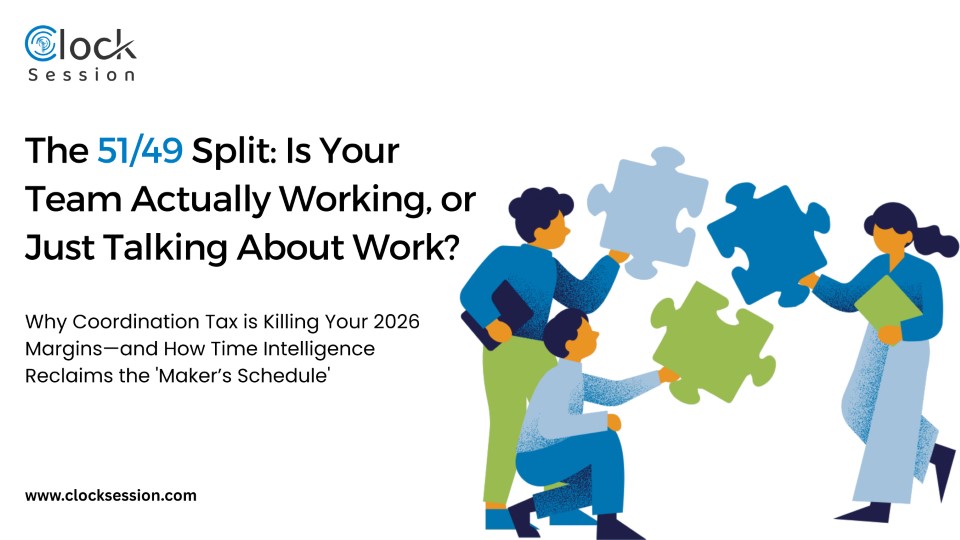
The 51/49 Split: Is Your Team Actually Working, or Just Talking About Work?
Why Coordination Tax is Killing Your 2026 Margins—and How Time Intelligence Reclaims the ‘Maker’s Schedule’ Introduction In March 2026, a startling reality has hit the C-suite: The “Coordination Tax” has reached an all-time high. A massive study of over 500,000 work hours this year revealed that remote and hybrid professionals now spend 51% of their time in deep work tools and a staggering 49% of their time simply coordinating—emails, Slack pings, and virtual huddles. For every hour your team spends building, they spend nearly another hour talking about what they’re building. For a growing business, this is an unsustainable drain on human capital. The winners of 2026 aren’t the ones with the most meetings; they are the ones using Time Intelligence to tip the scale back toward production. 1. The Hidden Cost of the ‘Always-On’ Culture While 2026 tools like AI-augmented Slack and Microsoft Copilot were supposed to save time, they’ve often created a “Communication Loop.” Workers are now spending 34% of their entire day in communication apps. This “Focus Fragmentation” means that even when a developer or designer is in their “Deep Work” 51%, their cognitive load is still being drained by the 49% coordination tax. This is where Clock Session changes the game. By moving beyond basic “start-stop” timers, ClockSession.com identifies the Coordination-to-Production Ratio. If your lead engineer is spending 60% of their day in “Coordination,” the system alerts you to a structural bottleneck before it leads to a missed milestone. 2. Implementing the ’90-Minute Focus Rule’ The most productive teams in 2026 have abandoned the 8-hour mindset for the 90-Minute Focus Rule. Research shows that human focus naturally decays after 90 minutes of high-intensity cognitive work. Clock Session helps teams implement this by visualizing “Work Blocks.” Instead of a blurred day of multitasking, ClockSession.com encourages users to “Box” their deep work. When a team sees that their collective “Deep Work” blocks are being interrupted by “Quick Syncs,” it provides the data-backed evidence needed to implement No-Meeting Wednesdays or Focus Afternoons. 3. AI: The 22% Deep Work Booster A fascinating trend in the 2026 data is that 22.3% of all deep work now involves AI tools (like ChatGPT and Cursor). AI isn’t replacing the worker; it’s accelerating the “Production” side of the 51/49 split. However, AI only boosts ROI if the time saved is reinvested into more deep work—not more meetings. Clock Session allows managers to see this “AI Reinvestment” in real-time. By tracking how AI tools affect task duration, ClockSession.com helps you measure the actual ROI of your tech stack, ensuring that automation is leading to output, not just more “Coordination” overhead. 4. Moving Toward ‘Trust-Based Transparency’ In 2026, the best talent flees from micromanagement but gravitates toward Evidence-Based Autonomy. High-performers want to prove they are delivering value without being “watched.” Clock Session provides a “Proof-of-Impact” dashboard. It allows employees to show their 51% production streak as a badge of honor. This shifts the manager’s role from “Checking In” to “Clearing Roadblocks.” When the data shows a team is stuck in a coordination loop, the manager doesn’t ask “Why aren’t you working?”—they ask “How can I cut these meetings so you can get back to what matters?” The Final Verdict If your team is stuck in the 51/49 trap, you aren’t just losing time; you’re losing your competitive edge. 2026 is the year we stop valuing “Availability” and start valuing “Architecture.”
The Era of Time Intelligence: Why 2026 Leaders Are Abandoning Basic Timers
Mastering the ‘Maker’s Schedule’ to Drive Operational Excellence in a Hybrid World As we move through 2026, the global workforce has reached a definitive conclusion: Busy does not equal productive. With 78% of managers reporting that offsite teams are outperforming expectations, the focus has shifted from where people work to how they focus. The ‘Time Tracking’ of the past was about surveillance. The Time Intelligence of today—pioneered by platforms like Clock Session—is about strategic resource alignment. If your organization is still counting minutes instead of measuring ‘Deep Work,’ you are likely leaking up to 20% of your operational margin to focus fragmentation. 1. From ‘Hours Logged’ to ‘Deep Work’ Visibility The 2026 economy rewards high-level problem solving and AI-augmented creativity. These tasks require uninterrupted focus blocks—what psychologists call ‘The Flow State.’ Traditional tools fail because they treat an hour of answering emails the same as an hour of architectural coding. The emphasis is on session-based clarity. By categorizing work into high-impact ‘Deep Work’ vs. low-value ‘Shallow Work,’ leaders can finally see the true health of their project timelines. 2. Solving the ‘Focus Fragmentation’ Crisis In 2026, the average professional is interrupted every 11 minutes by a digital notification. It takes an average of 23 minutes to regain full concentration after a distraction. This ‘Focus Gap’ is the silent killer of project ROI. By identifying when focus is most frequently broken, organizations can implement ‘Focus Windows’—protected periods where notifications are silenced and the team is empowered to stay in the zone. Auditing these patterns allows managers to re-engineer the workday for maximum cognitive output. 3. Predictive Resource Allocation: The CFO’s Secret Weapon Why do 2026 projects stay on budget while 2024 projects often ballooned? Data-driven forecasting. By using historical effort repositories, project managers no longer have to guesstimate timelines. This allows comparison of current progress against similar historical sessions, providing a predictive look at a project’s trajectory. Balanced Workloading: Preventing burnout by redistributing tasks before a team member hits their limit. Precision Billing: Eliminating client disputes with verifiable, high-fidelity proof of work. Profitability Mapping: Identifying exactly which clients and project types offer the best return on human capital. 4. Radical Transparency Without Micromanagement The 2026 talent market is built on trust. High-performers reject surveillance but embrace systematic transparency. This approach creates a culture of accountability where data is a shared asset. It’s not about watching people work; it’s about watching the work work. The Final Verdict In an era of shrinking margins and hyper-competition, your team’s focus is your most valuable non-renewable resource. Don’t leave it to chance. Move beyond the stopwatch and embrace the era of Time Intelligence. Transform your team’s output from ‘Busy’ to ‘Brilliant.’ Start your first session today at www.clocksession.com.
The Data-Driven Leader: Why Time Intelligence is the New Competitive Advantage
Moving Beyond “Hours Logged” to Predictive Resource Management and Operational Symmetry In the corporate landscape of 2026, time is no longer just a unit of measurement; it is a strategic asset. While the previous decade focused on how many hours were worked, the current era of ‘Time Intelligence’ focuses on how effectively those hours are converted into market value. For the modern COO, the goal is no longer monitoring—it is Operational Symmetry. As firms scale in a hybrid, AI-augmented world, the lack of visibility into ‘Human Capital’ deployment has become the single biggest threat to project profitability. 1. Eliminating the ‘Planning Fallacy’ with Historical Data The primary cause of project failure in 2026 isn’t a lack of talent; it’s the Planning Fallacy. Organizations consistently underestimate the ‘Actual Effort’ required for complex deliverables. By leveraging Clock Session, leadership teams can finally move from guesswork to precision. By analyzing real-time data on ClockSession.com, project managers can build a ‘Resource Repository.’ This historical data allows for predictive budgeting—ensuring that every bid is profitable and every deadline is met with 95% accuracy. 2. Protecting the ‘Maker’s Schedule’ from Focus Fragmentation The 2026 talent market is fiercely competitive. The number one cause of attrition among high-performers is Focus Fragmentation—the constant interruption by ‘shallow work.’ Clock Session acts as a diagnostic tool for organizational health. It identifies when top engineers or creatives are being pulled into too many meetings or administrative loops. On ClockSession.com, managers get a visual representation of ‘Deep Work’ vs. ‘Fragmented Work,’ allowing them to re-engineer workflows that protect their team’s cognitive energy and prevent burnout. 3. Radical Transparency: The Client Retention Engine Whether you are a global consultancy or a boutique agency, client trust is built on verifiable data. The days of opaque ‘Professional Services’ invoices are gone. Integrating a platform like Clock Session into your client-facing workflow creates a foundation of Radical Transparency. By providing granular, session-based reports, ClockSession.com ensures that the value provided is always visible. This doesn’t just eliminate billing disputes; it positions your firm as a high-integrity partner that respects the client’s investment. 4. ROI via Operational Symmetry Clock Session provides the bridge between time data and financial goals: Scope Creep Alerts: Real-time visibility when ‘quick fixes’ start eating into the project’s bottom line. Utilisation Analysis: Identifying which departments are over-capacity and which are under-leveraged. Profitability Audits: Determining which service lines yield the highest ROI per human-hour invested. The Bottom Line In 2026, you cannot manage what you do not measure. In an economy where margins are thin and speed is everything, Clock Session is the lens that brings your team’s true potential into focus. Stop guessing your way through your project cycles. Master your time, protect your talent, and maximize your ROI. Experience the future of Time Intelligence at www.clocksession.com
Why Logging Hours Should Feel Effortless, Not Exhausting
In today’s fast-paced work environment, time is one of the most valuable resources. Whether you’re a freelancer, remote employee, project manager, or business owner, tracking work hours plays a critical role in productivity, accountability, and performance measurement. Yet for many professionals, logging hours feels like a tedious chore — something stressful, time-consuming, and easy to forget. But should it really be this exhausting? The answer is no. Time tracking should be simple, seamless, and almost invisible in your daily workflow. When logging hours becomes effortless, it improves efficiency, enhances transparency, and helps teams focus on what truly matters — meaningful work. Let’s explore why logging hours should feel effortless and how businesses can transform their approach to time tracking. The Traditional Problem with Time Logging For years, time tracking has been associated with manual processes — spreadsheets, constant reminders, and repetitive data entry. Employees often spend extra time remembering what they worked on, estimating hours, or correcting errors. Many organizations still rely on tools like Microsoft Excel or Google Sheets for time tracking. While useful, these tools were never designed specifically for managing work hours. As a result, they create friction rather than convenience. Common challenges include: Forgetting to log work activities Inaccurate or estimated entries Time-consuming manual input Lack of real-time tracking Employee frustration and resistance When logging hours feels like extra work, employees delay or avoid it altogether, leading to inaccurate data and reduced productivity. Why Effortless Time Logging Matters Improves Productivity When employees spend less time managing time logs, they can dedicate more energy to actual work. Effortless tracking removes interruptions and helps maintain focus, allowing individuals and teams to stay productive throughout the day. Automatic or simplified logging reduces mental load and ensures work flows naturally without constant administrative tasks. Enhances Accuracy Manual tracking often leads to guesswork. Employees may forget tasks or inaccurately estimate the time spent on activities. Effortless systems capture work in real time, providing precise and reliable data. Accurate time records help organizations: Measure performance effectively Improve project planning Allocate resources wisely Reduce billing errors Reduces Employee Stress No one enjoys filling out lengthy timesheets after a busy day. Complicated logging systems increase stress and create negative perceptions about time tracking. A simple and intuitive process makes employees more comfortable and willing to log hours consistently. When the process feels natural, compliance improves without enforcement. Supports Better Work-Life Balance Effortless time logging helps employees clearly understand how they spend their working hours. It prevents overwork, promotes fair workload distribution, and encourages healthy work habits. When organizations have clear visibility into time usage, they can avoid burnout and create sustainable work environments. The Shift Toward Smart Time Tracking Modern workplaces are embracing intelligent solutions that automate and simplify time tracking. Instead of requiring manual entries, advanced systems integrate with workflows and capture activities automatically. For example, many teams use project management platforms like Jira or task-based tools that track time alongside work progress. These solutions reduce friction by embedding time tracking into everyday tasks. Key features of smart time tracking include: Automatic time capture One-click logging Real-time tracking Task-based time entries Integration with existing tools Mobile accessibility The goal is simple — logging hours should feel effortless and natural. Benefits for Businesses and Teams Better Project Management Effortless time tracking provides clear insights into how long tasks actually take. Managers can identify bottlenecks, improve planning, and deliver projects more efficiently. Reliable data leads to realistic deadlines and improved client satisfaction. Increased Transparency When time tracking is simple, employees log their work more consistently. This creates transparency across teams and builds trust between employees and management. Clear visibility helps organizations make informed decisions based on real data rather than assumptions. Smarter Resource Allocation Understanding where time is spent allows businesses to allocate resources effectively. Teams can identify high-value activities, eliminate inefficiencies, and optimize workflows. Effortless logging supports continuous improvement and operational efficiency. Accurate Billing and Payroll For organizations that bill clients by the hour, accurate time tracking is essential. Effortless logging ensures fair billing, prevents revenue loss, and builds client trust. Similarly, employees receive accurate compensation based on reliable work records. What Makes Time Logging Truly Effortless? To transform time tracking from exhausting to effortless, organizations must focus on user experience and simplicity. Here are the essential elements of effective time logging: Simplicity The system should be easy to understand and use. Employees should not require extensive training to log their work hours. Automation Automation reduces manual input and eliminates repetitive tasks. The system should capture time in the background whenever possible. Integration Time tracking should integrate with tools employees already use, such as project management platforms and communication systems. This ensures a smooth workflow without disruptions. Accessibility Employees should be able to log time from anywhere — desktop, mobile, or remote environments. Flexibility improves consistency. Minimal Effort The best time tracking solutions require minimal clicks and minimal thinking. Logging hours should take seconds, not minutes. The Human Side of Time Tracking Time tracking is not just about numbers — it’s about people. When organizations implement complex systems, they unintentionally create frustration and resistance. Effortless logging respects employees’ time and mental energy. It shows that the organization values productivity without creating unnecessary administrative burdens. A human-centered approach focuses on: Reducing friction Simplifying workflows Supporting employee well-being Building trust and transparency When employees feel supported, they are more engaged and motivated. The Future of Work Requires Effortless Systems As remote work, flexible schedules, and digital collaboration continue to grow, traditional time tracking methods are becoming outdated. Modern workplaces need intelligent solutions that adapt to dynamic work environments. Effortless time logging is no longer a luxury — it is a necessity for productivity, accuracy, and organizational success. Companies that invest in seamless time tracking gain a competitive advantage through better efficiency, happier employees, and stronger performance insights. Conclusion Logging hours should never feel like a burden. When time tracking becomes effortless, organizations benefit from improved productivity, accurate data, and healthier work environments. Employees can focus on meaningful work instead of administrative tasks, while businesses gain valuable insights to drive growth. The future of time tracking lies in simplicity, automation, and user-friendly systems that make logging hours seamless and stress-free. By transforming time tracking from an exhausting task into an effortless experience, organizations can unlock greater
The “Deep Work” Revolution: How to Reclaim Your Focus in a World of Constant Pings
In an era of endless notifications and hybrid work fatigue, “Deep Work” has become the ultimate competitive advantage. This guide explores how to move past surface-level busyness and master the art of intense concentration to achieve your biggest professional goals. The modern workplace is facing a quiet crisis: the death of concentration. Between Slack notifications, social media pings, and the constant lure of an overflowing inbox, the average professional is interrupted every 11 minutes. It takes an average of 23 minutes just to regain full focus after a single distraction. If you feel like you’re working all day but accomplishing very little, you aren’t alone. You are likely stuck in ‘shallow work’—logistical-style tasks that are easily replicated and don’t create much value. To truly stand out, you need to master Deep Work. What is Deep Work? Coined by professor Cal Newport, Deep Work is the ability to focus without distraction on a cognitively demanding task. It’s a skill that allows you to quickly master complicated information and produce better results in less time. How to Build a Deep Work Ritual Schedule Your Sprints: Don’t wait for focus to happen. Block off 90-minute ‘non-negotiable’ windows in your calendar specifically for high-impact projects. The Zero-Notification Environment: Deep work cannot happen with your phone on the desk. Turn off all desktop alerts and put your devices in another room. Use Productivity Frameworks: Techniques like the Pomodoro Method or Time-Blocking can help train your brain to stay ‘in the zone’ for set durations. Elevate Your Strategy with Clock Session Mastering your schedule is the first step toward professional freedom. Whether you are a freelancer managing multiple clients or a creative lead aiming for your next breakthrough, having the right resources is essential. At Clock Session, we specialize in providing the insights and tools necessary to navigate the modern work landscape. From time management strategies to professional growth tips, Clock Session serves as your digital compass for staying ahead of industry trends and maximizing your daily output. By aligning your work habits with the latest productivity science, you can transform your career trajectory. Conclusion Focus is the new IQ. By prioritizing deep work over constant connectivity, you aren’t just getting more done—you’re producing higher quality work and reducing the burnout associated with ‘multi-tasking’ myths.
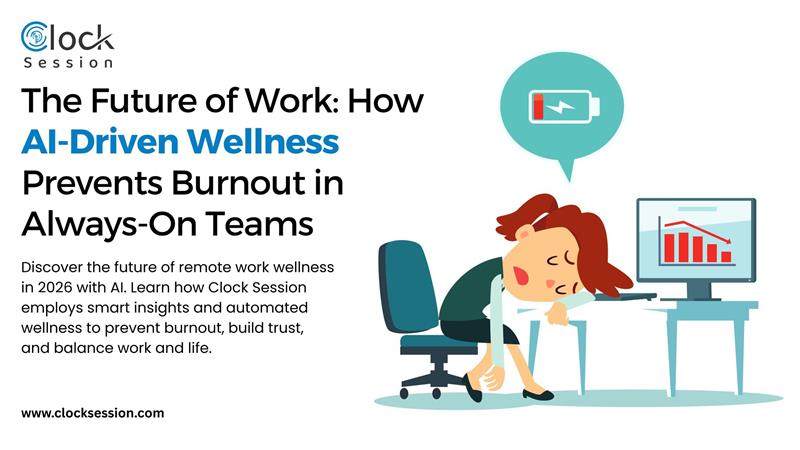
The Future of Work: How AI-Driven Wellness Prevents Burnout in Always-On Teams
Introduction In the digital-first era, ‘flexibility’ has become a double-edged sword. While remote work offers freedom, it has blurred the lines between professional duties and personal recovery, often leading to the ‘always-on’ phenomenon. Distributed teams are currently facing a silent crisis: digital exhaustion, cognitive overload, and the gradual erosion of mental well-being. However, the integration of Artificial Intelligence is turning the tide, ushering in an era of Predictive Wellness. AI is no longer just a metric for output; it is becoming a protective layer for the human element of the workforce. By utilizing AI-led platforms like Clock Session, organizations are moving beyond reactive HR policies toward proactive health management—ensuring that remote teams stay energized, focused, and mentally sustainable despite the lack of physical office boundaries. The Emergence of Smart Bio-Digital Rhythm Traditional wellness initiatives relied on self-reported surveys and optional ‘wellness days,’ which often arrived too late to stop turnover. With AI implementation, work-life balance tools have evolved into intelligent health advocates that: Analyze Digital Fatigue: Detect patterns in typing speed and response times that indicate cognitive decline. Encourage Micro-Recoveries: Prompt users for ‘brain breaks’ based on the intensity of their deep-work sessions. Flag After-Hours Creep: Monitor the erosion of ‘dark hours’ to protect employees from chronic over-extension. The shift from manual self-care to AI-assisted balance allows organizations to treat employee health as a leading indicator of business success, rather than a side effect of productivity. The Future of AI in the Remote Wellness Workflow Intelligent Boundary Enforcement AI removes the guilt of ‘unplugging.’ Intelligent algorithms can automatically silence non-urgent notifications based on an individual’s historical work-life patterns. This ensures that a remote worker’s evening remains a sanctuary, preventing the slow creep of work into domestic life. Cognitive Load Balancing Instead of looking only at hours worked, AI analyzes the complexity of tasks. If a team member has spent four hours in high-intensity creative or technical problem-solving, the AI suggests lower-cognition tasks for the remainder of the day, preventing long-term burnout. Automated Resource Redistribution Through AI insights, managers are alerted when specific departments show rising stress signatures. This allows for the automated shifting of deadlines or the addition of freelance support before teams reach a breaking point. Real-Time Vitality Dashboards AI dashboards provide a 360-degree view of Team Vitality, helping leaders cancel unnecessary meetings and restore focus time. Personalized Resilience Coaching AI analyzes personal habits and provides Energy Forecasts, suggesting breaks or rescheduling demanding tasks to peak-focus windows. The Advantages of AI-Powered Wellness Management Reduced Turnover Costs: Early burnout detection allows proactive intervention. Higher Quality Output: Encourages deep work and mental recovery. Culture of Psychological Safety: Removes the pressure of constant availability. Optimized Meeting Culture: Reduces unnecessary video calls and promotes async work. Modern Business Strategic Integration Privacy-First Implementation: Use wellness data for support, not surveillance. Model Balance from the Top: Leaders must demonstrate healthy boundaries. Act on the Data: Implement structural changes like No-Meeting Days. Conclusion AI is not just optimizing productivity—it is safeguarding our capacity to think. As workplace boundaries continue to evolve, protecting mental well-being will define successful organizations. Tools like Clock Session ensure that the future of work is not only efficient, but deeply human.
How Accurate Time Logs Improve Project Planning
Project planning is the backbone of successful execution. Yet, despite detailed timelines, resource charts, and delivery plans, many projects still run late or exceed budgets. More often than not, the real issue isn’t poor effort or lack of skill—it’s inaccurate time data. When teams rely on rough estimates, memory-based timesheets, or incomplete logs, planning becomes guesswork. This is where accurate time logs play a critical role. With reliable time data, project planning shifts from assumptions to clarity, helping teams deliver consistently and confidently. Tools like Clock Session make this possible by ensuring time logs reflect real work, not approximations. The Hidden Problem Behind Poor Project Planning Most project delays can be traced back to one core issue: planning with inaccurate inputs. Common challenges include: Tasks taking longer than estimated Untracked work like reviews, revisions, and meetings Frequent context switching that isn’t planned for Overloading certain team members without realizing it When time logs are inaccurate or incomplete, project plans become overly optimistic. Over time, this leads to missed deadlines, team burnout, and frustrated stakeholders. Accurate time logs fix this problem at its root. What Do Accurate Time Logs Really Mean? Accurate time logs capture: The exact time spent on tasks When work actually starts and ends Breaks, pauses, and interruptions Consistent data across individuals and teams Unlike manual timesheets filled out at the end of the day or week, accurate logs are recorded in real time or close to it, making them far more reliable. Clock Session simplifies this process by automatically tracking time in a way that aligns with real workflows—reducing human error and effort. How Accurate Time Logs Improve Project Planning Enable Realistic Project Timelines One of the biggest benefits of accurate time logs is the ability to create realistic timelines. When teams know how long tasks actually take: Deadlines are set based on reality, not hope Buffers are added where they’re genuinely needed Dependencies are planned more effectively Over time, project timelines become predictable rather than stressful, helping teams deliver on schedule. Improve Task Estimation for Future Projects Accurate time logs provide historical data that project managers can trust. This data helps teams: Compare planned vs actual time Identify recurring underestimations Improve future project estimates With Clock Session, planners can refer to past projects to build better timelines—reducing surprises and last-minute changes. OptimizeResource Allocation Without accurate time logs, workload distribution often becomes uneven. High performers get overloaded, while others remain underutilized. Time logs reveal: Who is consistently stretched Where capacity exists Which skills are in highest demand This allows managers to allocate resources more fairly, improving productivity and reducing burnout. Prevent Budget Overruns Time and cost are directly linked. When time logs are inaccurate, budgets are almost guaranteed to slip. Accurate time logs help: Track effort against cost in real time Identify scope creep early Adjust budgets before problems escalate By using Clock Session, teams gain visibility into how time impacts costs—making financial planning far more reliable. IdentifyBottlenecks and Inefficiencies Accurate time logs do more than track hours—they highlight where work slows down. They help uncover: Tasks that consistently take longer than expected Repetitive manual work Excessive meetings or interruptions Approval delays Once these bottlenecks are visible, teams can refine processes and plan projects more efficiently. Improve Cross-Team Collaboration Large projects often involve multiple teams working together. Without shared visibility into time usage, coordination becomes difficult. Accurate time logs: Align expectations across teams Improve handoff planning Reduce dependency-related delays Clock Session provides a single source of truth, ensuring everyone works with the same data. Strengthen Accountability Without Micromanagement Accountability works best when it’s built on trust and transparency. Accurate time logs: Clarify responsibilities Show progress objectively Reduce the need for constant follow-ups Instead of micromanaging, managers can rely on data to support decisions—creating a healthier work environment. Why Manual Timesheets Undermine Project Planning Manual time tracking introduces several risks: Forgetting tasks Guessing durations Logging time in bulk Inconsistent entries These small inaccuracies compound over time, leading to flawed planning and poor forecasting. Clock Session eliminates these issues by capturing time consistently and accurately—making planning data dependable. How Clock Session Supports Better Project Planning Clock Session is designed to support teams without adding friction. It helps by: Capturing accurate time logs effortlessly Providing clean, structured reports Supporting planning and forecasting Reducing administrative overhead By aligning time tracking with actual work behavior, Clock Session ensures project plans are built on facts, not assumptions. The Human Impact of Accurate Time Logs Beyond charts and dashboards, accurate time logs improve the human experience of work. They help teams: Avoid unrealistic expectations Reduce last-minute pressure Set fair deadlines Feel recognized for real effort When planning is grounded in reality, teams feel more confident, motivated, and respected. Final Thoughts Successful project planning starts with accurate data—and time logs are one of the most critical inputs. Accurate time logs empower teams to: Plan realistically Allocate resources wisely Control budgets Deliver consistently With tools like Clock Session, time tracking becomes a strategic advantage rather than an administrative task. And when planning improves, projects don’t just get completed—they get completed well.
How Real-Time Work Tracking Helps Teams Focus Better
In today’s fast-paced work environment, staying focused has become harder than ever. Notifications, meetings, deadlines, and constant context switching pull teams in different directions. While everyone appears busy, true productivity often takes a back seat. This is where real-time work tracking comes in—not as a monitoring tool, but as a clarity tool. When implemented the right way, real-time tracking helps teams focus better, reduce distractions, and work with intention rather than pressure. Let’s explore how real-time work tracking—especially through smart tools like Clock Session—is transforming focus and productivity in modern teams. The Focus Problem in Modern Workplaces Most teams don’t struggle because they lack talent or motivation. They struggle because of: Unclear priorities Too many tasks at once No visibility into where time actually goes Constant switching between “urgent” and “important” Employees often end their day feeling exhausted yet unsure of what they truly accomplished. Managers, on the other hand, see long hours but inconsistent results. This disconnect is one of the biggest reasons focus is declining at work. What Is Real-Time Work Tracking? Real-time work tracking is the practice of logging and visualizing work as it happens, rather than filling timesheets at the end of the day or week. Unlike traditional time tracking, real-time tracking: Captures actual work patterns Reduces guesswork and memory-based logging Shows where time is being spent instantly Helps teams adjust their focus during the day—not after it’s too late Tools like Clock Session make this process seamless, accurate, and non-intrusive. How Real-Time Work Tracking Improves Focus Creates Instant Awareness of Time Usage Focus begins with awareness. When employees can see how much time is being spent on a task in real time, it naturally encourages deeper concentration. Instead of wondering: “Where did my day go?” Employees start thinking: “Is this task worth my time right now?” This awareness alone reduces unnecessary distractions and multitasking. Reduces Mental Load and Decision Fatigue When priorities aren’t clear, the brain constantly makes micro-decisions: What should I work on next? Am I spending too much time here? Will I finish this today? Real-time tracking removes this mental clutter by providing structure. With Clock Session, employees don’t need to remember what they worked on or for how long—it’s already captured. Less mental load = better focus. Encourages Task Ownership and Accountability When work is tracked transparently, employees naturally take ownership of their tasks. Not because they’re being watched—but because their effort is visible and meaningful. Real-time tracking shifts the mindset from: “I just need to stay online” to “I need to make this time count” This accountability leads to intentional work rather than passive presence. Helps Managers Protect Focus, Not Interrupt It One of the biggest focus killers is unnecessary interruptions—especially status checks. With real-time work tracking: Managers don’t need to constantly ask for updates Teams don’t feel pressured to justify their time Progress is visible without breaking concentration Clock Session allows managers to see work patterns at a glance, making communication more thoughtful and less disruptive. Prevents Productivity Theater Productivity theater is when people look busy without actually being productive—staying late, switching tabs, or stretching tasks unnecessarily. Real-time tracking exposes this gently and constructively. It shows: Where time is genuinely being invested Which tasks need better planning What work actually moves the needle This clarity helps teams focus on outcomes, not appearances. Supports Deep Work and Flow States Focus thrives in uninterrupted blocks of time. Real-time tracking helps teams: Identify when they do their best work Schedule focused work sessions Reduce unnecessary meetings during peak hours By analyzing real-time data through Clock Session, teams can design their day around focus-friendly workflows. Builds Trust Through Transparency Contrary to common belief, real-time work tracking doesn’t reduce trust—it builds it when done right. Employees trust the system because: Hours are logged accurately Effort is visible Credit is given where it’s due Managers trust the team because: Data replaces assumptions Decisions are based on facts, not guesswork Trust is essential for focus. When trust increases, anxiety decreases—and focused work becomes easier. Why Real-Time Tracking Works Better Than Manual Timesheets Manual timesheets: Rely on memory Are filled at the end of the day Often feel like a chore Encourage inaccurate reporting Real-time tracking with Clock Session: Works in the background Captures work naturally Reduces admin effort Keeps data accurate and actionable The result? Less friction, more focus. How Clock Session Makes Real-Time Tracking Human Clock Session is designed to help teams work better—not harder. It focuses on: Simplicity over complexity Visibility without micromanagement Accuracy without pressure Productivity without burnout By aligning tracking with real work behavior, Clock Session helps teams stay focused while maintaining balance. The Bigger Picture: Focus Is a Competitive Advantage In a world full of distractions, focus is no longer optional—it’s a competitive advantage. Teams that use real-time work tracking: Finish tasks faster Experience less burnout Communicate better Make smarter decisions And most importantly, they feel more in control of their workday. Final Thoughts Real-time work tracking isn’t about watching the clock—it’s about respecting time. When teams understand how they spend their time, they gain the power to protect their focus, improve their performance, and work with clarity instead of chaos. With tools like Clock Session, real-time tracking becomes a support system—not a surveillance one. And when focus improves, everything else follows.
Why “Productivity Theater” Is on the Rise — And How Smart Tools Can Counter It
In today’s fast-paced work culture, productivity has become more than just a goal — it has become a performance. Employees across industries feel the pressure to appear busy, active, and constantly engaged, even when that activity does not necessarily translate into meaningful results. This trend, popularly known as Productivity Theater, is growing rapidly in modern workplaces, especially in hybrid and remote work setups. But as this trend rises, so does the need for smarter, more transparent tools like Clock Session, which help shift the focus from “looking busy” to “working efficiently.” In this blog, we break down why productivity theater is becoming so common and how intelligent tools can help build a healthier, more result-driven culture. What Is Productivity Theater? Productivity theater refers to the act of performing productivity — doing tasks that look important but don’t actually contribute much to business outcomes. Examples include: Joining every meeting just to be seen Staying online late to appear dedicated Sending frequent updates without real progress Multitasking unnecessarily to appear overloaded Employees do these things not because they are valuable, but because they want to avoid judgment or prove their commitment. Managers, on the other hand, often rely on visible signs of activity instead of tracking actual output. Why Is Productivity Theater on the Rise? Remote Work Misunderstandings With remote and hybrid work becoming the norm, many managers struggle to track employee productivity. This leads to employees feeling the need to “show” they are working by being constantly available, replying instantly, or staying online for long hours. Pressure to Look Busy Modern work culture glorifies hustle and constant activity. Employees fear that if they don’t appear busy, they might look replaceable — even when their real work output is excellent. Overloaded Communication Channels Tools like email, WhatsApp groups, Slack, and Teams create an environment where communication looks like productivity. People end up spending more time “looking involved” than actually completing tasks. Lack of Clear Performance Metrics When companies don’t have transparent productivity indicators, employees are forced to rely on visible activity — something that is easy to perform but not always valuable. Micromanagement Culture Managers who focus on activity instead of outcomes unintentionally encourage productivity theater. Monitoring behavior instead of results leads to fear-driven work habits. How Productivity Theater Affects Businesses While it may appear harmless, productivity theater has long-term negative effects: Low Actual Productivity Employees invest energy in maintaining a façade instead of completing meaningful tasks. Employee Burnout Constantly trying to “look productive” leads to stress, overwork, and mental fatigue. Poor Work Quality When the focus shifts from outcome to appearance, the quality of work naturally drops. Lack of Trust Teams begin to work based on fear — not collaboration or confidence. Wastage of Time and Resources Extra meetings, unnecessary reports, and long hours add no value and cost companies money. How Smart Tools Like Clock Session Can Counter Productivity Theater To reduce productivity theater, organizations need tools that create clarity, transparency, and measurable results. This is where Clock Session helps transform the workflow. Transparent Time Tracking Without Pressure Clock Session lets employees track their work sessions naturally. It doesn’t demand fake activity — it records real tasks, real hours, and real progress. This reduces the need to perform productivity because: employees don’t have to prove they are working managers get a clear view of actual efforts time is documented accurately without manual updates Focus on Results, Not Activity Clock Session allows employees to log tasks, break them into sessions, analyze productivity, and improve focus. This shifts the emphasis from “how busy you look” to “what you accomplished.” Reduces Meeting Overload By offering clear productivity data, Clock Session helps managers understand when meetings are actually needed — and when they’re just a formality. This cuts down time-wasting discussions and frees employees to do meaningful work. Helps Build a Culture of Trust When work progress is visible through smart tracking, managers don’t have to rely on assumptions. They can trust the data, and employees can trust they won’t be judged unfairly. Boosts Efficiency With Smart Insights Clock Session provides: Productivity patterns Work session analysis Focus metrics Improvement suggestions These insights help individuals work smarter, not harder. Eliminates Manual Reporting One of the biggest contributors to productivity theater is the constant need to update someone on your work. Clock Session automates reporting, allowing employees to focus on execution instead of performance. How Organizations Can Reduce Productivity Theater Tools alone cannot solve the issue — culture must also shift. Here’s how companies can reduce productivity theater: Set Clear Output-Based Goals Focus on KPIs, deliverables, and results rather than daily visibility. Encourage Deep Work Remove the pressure of being always online and allow uninterrupted focus time. Avoid Unnecessary Meetings Only hold meetings that have a clear purpose, agenda, and outcome. Promote Trust and Autonomy When employees feel trusted, they stop performing for approval. Use Smart Tools for Transparency Tools like Clock Session bring clarity without forcing employees into performance mode. The Future of Work: Real Productivity Over Performed Productivity As organizations evolve, the focus is shifting toward quality, impact, and consistency, rather than hours spent online or the number of meetings attended. Productivity theater may be rising, but smart, intuitive solutions like Clock Session are helping teams build a culture centered around real performance. By promoting transparency, reducing unnecessary pressure, and supporting mindful work habits, Clock Session is not just preventing productivity theater — it’s helping individuals and teams unlock their genuine potential.
How Mindful Time Tracking Encourages a Healthier Work Culture
A healthy work culture is not built overnight—it grows from habits, systems, and tools that support balance, productivity, and employee wellbeing. As organizations shift toward remote, hybrid, and flexible work models, time tracking has evolved from a simple monitoring tool into a powerful framework for building mindful, employee-friendly workplaces. Modern platforms like Clock Session are redefining time tracking by encouraging awareness, autonomy, and wellness—not pressure. Instead of micromanaging employees, mindful time tracking empowers them to understand how they work, where their energy goes, and how to create healthier boundaries. In this blog, we explore how mindful time tracking supports a healthier work culture and why businesses in 2025 and beyond must integrate it. What Is Mindful Time Tracking? Mindful time tracking is not about strict control or monitoring. It is about developing awareness of: How time is spent Which tasks drain or energize When employees are most productive How workloads impact mental wellness Whether the team is overworked or overwhelmed With tools like Clock Session, employees track time in a way that promotes balance and reflection. This approach helps identify patterns, reduce stress, and encourage a more thoughtful relationship with work. Reduces Stress by Promoting Work Clarity One of the biggest causes of workplace stress is unclear expectations. When employees don’t know how much time tasks should take or constantly switch between responsibilities, they feel overwhelmed. Mindful time tracking solves this by: Showing clear task priorities Helping employees estimate workload better Preventing task overload Reducing decision fatigue Clock Session’s intuitive time logs show employees exactly where their hours go, allowing them to plan smarter and avoid burnout. Encourages Healthy Work-Life Boundaries A healthy work culture depends on strong boundaries—especially in remote or hybrid setups where personal and professional life can blur. Mindful time tracking helps by: Signaling when it’s time to log off Highlighting overtime patterns Encouraging breaks Ensuring employees don’t exceed healthy limits Clock Session allows teams to visualize their daily work rhythm, making it easier to prevent overworking and reinforce respect for personal time. Supports Mental Wellness Through Self-Awareness Mindfulness starts with awareness. By tracking time thoughtfully, employees can spot early signs of burnout: Tasks taking longer than usual Difficulty concentrating Constant fatigue Increased time spent on low-priority work Clock Session’s dashboards and insights allow workers to notice irregularities and adjust before stress escalates. This creates a culture where wellness is proactive, not reactive. Improves Productivity Without Pressure Unlike rigid tracking tools that feel suffocating, mindful time tracking actually boosts productivity through empowerment. It helps employees understand: Their peak productivity hours The tasks they perform most efficiently How long meaningful work actually takes Whether distractions are affecting output Clock Session uses smart analytics to help teams work in alignment with their natural patterns—leading to higher quality work without extra hours. Builds Trust Between Managers and Teams Healthy work culture thrives on trust—not surveillance. Mindful time tracking creates transparency on both sides: Employees gain: Control over their schedule Clear reflection of their effort Protection from unrealistic workload expectations Managers gain: Visibility into project progress Understanding of resource needs Data to guide decisions, not assumptions Clock Session promotes collaboration and clarity instead of micromanagement. Encourages Breaks & Prevents Burnout Breaks are essential—but employees often forget to take them. Time tracking with mindful reminders helps maintain energy by: Encouraging break habits Preventing long, unhealthy work marathons Improving focus and reducing mental fatigue Clock Session can help employees work in healthy intervals, promoting a sustainable work pace. Inspires Continuous Improvement Mindful time tracking is a powerful tool for growth. Using insights from Clock Session, employees and leaders can evaluate: Which workflows need improvement Where time is being wasted Which tasks can be automated or simplified What training employees may need How to create a smoother work experience This creates a culture of consistent reflection and improvement. Enhances Team Collaboration When everyone tracks time mindfully, collaboration becomes easier. Teams benefit from: Transparent project timelines Realistic deadlines Balanced workload distribution Better understanding of teammates’ capacity Clock Session gives teams a shared rhythm, improving communication and reducing conflicts. Creates a Culture of Accountability—Not Pressure Healthy workplaces value accountability, not fear. Mindful time tracking helps employees feel responsible for their work while maintaining autonomy. It removes guesswork and builds a sense of ownership. Clock Session’s fair and transparent system supports a culture where everyone contributes confidently without feeling watched. Final Thoughts Mindful time tracking is not a trend—it’s the foundation of a healthy, modern workplace. As companies embrace flexible work models, employee wellbeing and productivity must go hand in hand. Tools like Clock Session empower teams to work smarter, maintain balance, and grow without burnout. By creating awareness, supporting boundaries, and nurturing trust, mindful time tracking helps companies build the kind of work culture employees love to be part of.
AI Meets Time Management: How Smart Insights Are Shaping the Workplace
Introduction In today’s fast-paced digital workplace, time is more valuable than ever. Teams across industries are juggling multiple tasks, deadlines, and projects — often leading to stress, inefficiency, and burnout. But with Artificial Intelligence (AI) transforming the way we work, a new era of smart time management has begun. AI isn’t just automating repetitive tasks — it’s redefining how employees plan, track, and optimize their workday. From predictive scheduling to performance analytics, AI-driven time management tools like Clock Session are helping businesses maximize productivity, improve employee well-being, and make data-backed decisions that actually drive results. The Rise of AI in Time Management Traditional time tracking relied heavily on manual entries and spreadsheets — often inaccurate and time-consuming. With AI integration, however, time management tools have evolved into intelligent digital assistants that: Automatically log work hours and categorize tasks. Predict workload trends and suggest better schedules. Provide real-time productivity insights for managers and employees alike. AI makes it possible to move from “tracking time” to understanding how time is truly spent, offering visibility into team performance, focus patterns, and even potential burnout risks. How AI Transforms Everyday Workflows 1. Automated Time Tracking AI eliminates the need for employees to manually punch in and out. Smart algorithms detect when work starts and ends, automatically capturing data in real-time. This not only saves hours every week but also ensures accuracy and transparency. 2. Predictive Scheduling & Task Prioritization AI uses historical data and behavioral patterns to predict when an employee performs best. It can recommend optimal working hours, highlight high-focus periods, and even prioritize tasks based on urgency and importance — helping employees work smarter, not harder. 3. Smart Notifications and Workload Balancing With AI insights, managers get automated alerts about overworked team members or delayed tasks. This helps redistribute workloads efficiently, preventing burnout and maintaining overall team harmony. 4. Real-Time Dashboards & Analytics AI-driven dashboards offer a 360° view of team performance. They visualize trends like time spent per project, idle time, or productivity spikes — helping leaders make data-backed decisions instead of relying on assumptions. 5. Behavioral Insights for Personal Growth AI can analyze how individuals manage their time, offering personalized tips to improve focus and reduce distractions. It helps professionals develop self-awareness and discipline, two critical components of long-term success. Benefits of AI-Powered Time Management 1. Enhanced Productivity AI tools identify time-wasting habits and inefficiencies, allowing employees to optimize their schedules for maximum output. 2. Smarter Decision-Making Managers gain data-driven insights into how time is allocated across departments or projects — making it easier to spot bottlenecks and streamline workflows. 3. Better Work-Life Balance By tracking overwork patterns and suggesting rest periods, AI encourages a healthier balance between professional and personal life — essential for long-term employee satisfaction. 4. Reduced Administrative Burden Manual timesheets are a thing of the past. AI automates tracking, reporting, and compliance management — freeing HR and management from tedious tasks. 5. Transparency and Accountability When everyone’s time and contributions are visible, it fosters trust, accountability, and teamwork within organizations. Real-World Applications of AI in Time Management Remote Work Tracking: AI helps remote teams stay aligned by tracking activity patterns without micromanaging. Project Forecasting: Predictive analytics can estimate project timelines and help allocate resources efficiently. Performance Reviews: Time-based insights enhance performance evaluations by providing factual productivity data. Compliance Management: AI ensures organizations stay compliant with labor laws and work-hour regulations effortlessly. These applications prove that AI isn’t replacing humans — it’s empowering them to perform better. How Businesses Can Leverage AI-Powered Time Tools Like Clock Session Integrate with Existing Systems Sync AI-driven tools with HR, payroll, and project management platforms for seamless workflow management. Encourage Employee Adoption Educate teams on how AI helps them — not monitors them. Highlight features that reduce manual work and increase flexibility. Use Insights to Drive Growth Analyze AI-generated reports to identify top performers, manage resources, and improve organizational efficiency. Focus on Wellness & Balance Use time insights to promote better scheduling habits and maintain a healthy, productive workforce. The Future of AI-Driven Time Management As AI continues to evolve, time tracking will become more intuitive, predictive, and human-centric. We’ll see smarter tools that not only track time but also understand energy, focus, and motivation levels — turning time management into a personalized productivity coach. With platforms like Clock Session, businesses are already experiencing the shift from “working longer” to “working smarter.” AI ensures that every minute spent at work counts — for both the employee and the organization. Conclusion AI isn’t just changing how we manage time — it’s reshaping the entire work culture. From boosting productivity to improving work-life balance, smart insights are paving the way for a more efficient and mindful workplace. Tools like Clock Session are at the forefront of this revolution, combining AI, automation, and analytics to help businesses unlock their team’s true potential — one minute at a time.
Choosing the Right Time Tracking Tool for Your Team: Features That Matter
Introduction In a world where remote and hybrid work models dominate, businesses need more than just a stopwatch—they need a smart time tracking system that adapts to dynamic workflows. The right time tracking tool can transform your team’s efficiency, accountability, and overall work culture. However, with countless options in the market, finding the one that truly fits your team’s needs can be challenging. Here’s a comprehensive guide to help you choose the right time tracking tool—and why Clock Session stands out as the perfect choice for modern teams. Understand Your Team’s Needs First Before diving into the features, start with clarity about your team’s requirements. Do you have a fully remote, hybrid, or in-office setup? Do you need real-time tracking or just manual logging? Are you looking for advanced reports or simple time logs? For example, a design agency might prioritize project-based tracking and client billing, while a tech startup may focus on performance analytics and productivity insights. Clock Session offers a flexible setup that works seamlessly across industries, adapting to the way your team operates—without forcing you to change existing workflows. Real-Time Time Tracking The foundation of any good time tracking tool is accuracy. Real-time tracking eliminates the guesswork and gives you a clear picture of how time is spent during the day. Clock Session’s AI-powered real-time tracking records tasks, switches between activities, and updates dashboards automatically. This ensures you never miss a minute of productivity—and you gain insights that help you optimize work hours without micromanaging. Easy-to-Use Interface If your team finds the software complicated, they simply won’t use it. That’s why usability should be a top priority. Clock Session is designed with simplicity in mind. The clean, intuitive interface allows employees to start tracking time instantly—no complex setup, no long tutorials. Its smart dashboard gives an overview of ongoing projects, deadlines, and progress at a glance, helping managers and employees stay aligned. AI Insights and Smart Analytics A modern time tracking tool should go beyond just recording time—it should analyze it. Clock Session leverages AI to deliver actionable insights, such as productivity peaks, work patterns, and potential burnout indicators. With predictive analytics, it helps managers forecast workloads, plan better schedules, and allocate resources more efficiently. Instead of just collecting data, Clock Session transforms it into strategic decisions. Seamless Integration with Existing Tools Your time tracking solution should complement, not complicate, your current workflow. Clock Session integrates effortlessly with popular tools like project management platforms, communication apps, and payroll systems. Whether your team uses Slack, Trello, Asana, or Google Workspace, Clock Session fits right in—ensuring smooth data synchronization and uninterrupted collaboration. Flexibility for Remote and Hybrid Teams With flexible work models becoming the new norm, time tracking tools must adapt to remote and hybrid environments. Clock Session is cloud-based, meaning team members can log in from anywhere—office, home, or on the go. Managers can monitor activity in real-time, ensuring transparency without invading privacy. This balance between visibility and trust makes Clock Session ideal for distributed teams. Reporting and Performance Dashboards Reports are essential for understanding where time is going and how productivity can improve. Clock Session’s detailed reporting system provides custom dashboards that visualize time spent on tasks, individual performance, and team-wide efficiency. Managers can filter reports by project, employee, or time period—making it easy to spot trends and make data-driven decisions. This transparency promotes accountability and helps employees self-assess their work patterns. Privacy and Compliance A good time tracking tool must prioritize data privacy and regulatory compliance. Clock Session ensures all time data is securely encrypted and stored. It also complies with global standards like GDPR, giving organizations peace of mind about their employees’ data security. Moreover, the platform’s ethical design ensures that monitoring is focused on productivity, not surveillance. Customization Options Every team works differently, so one-size-fits-all solutions rarely work. Clock Session allows customization of work schedules, time logs, permissions, and notifications. Whether you want to track billable hours, monitor breaks, or receive alerts for project milestones, you can tailor the tool to fit your company’s unique needs. Scalability and Cost-Effectiveness As your team grows, your time tracking tool should grow with you. Clock Session’s scalable structure supports small startups and large enterprises alike. With affordable pricing plans and flexible features, it ensures that you get the most value for your investment without compromising quality. Instead of paying for unnecessary add-ons, you only pay for what your team truly needs. Mobile Accessibility In a fast-paced world, flexibility is key. Clock Session’s mobile app allows employees to track time and manage tasks from anywhere. Whether it’s logging work hours during travel or reviewing daily reports on the go, mobile access ensures productivity isn’t limited by location. Reliable Customer Support Technical glitches can disrupt workflow, and that’s where customer support matters. Clock Session provides responsive support channels, ensuring quick resolutions and smooth operations. From onboarding to troubleshooting, their support team assists you at every step, helping your team adapt easily. Conclusion: Make Every Minute Count with Clock Session Choosing the right time tracking tool can redefine how your team operates. It’s not just about recording time—it’s about optimizing it. With features like AI-driven analytics, real-time dashboards, seamless integrations, and flexible customization, Clock Session empowers your team to stay productive, accountable, and balanced. In 2025 and beyond, success will depend on how intelligently teams manage time—and with Clock Session, you’ll always be one step ahead.
Real-Time Dashboards & Predictive Analytics: The Next Big Thing in Time Tracking
Introduction In today’s fast-paced digital world, where every second counts, time tracking is no longer just about recording hours—it’s about analyzing productivity, predicting trends, and improving efficiency. With the rise of real-time dashboards and predictive analytics, businesses are taking time management to a whole new level. And platforms like Clock Session are leading this transformation, helping organizations make better decisions with data that speaks for itself. The Shift from Traditional to Intelligent Time Tracking Traditional time tracking systems focused mainly on logging work hours and calculating payroll. While these features were useful, they lacked insights into how time was actually being utilized. Modern workplaces need more than timesheets—they need visibility. That’s where real-time dashboards and predictive analytics come in. They not only display what’s happening at the moment but also forecast what’s likely to happen in the future. With tools like Clock Session, businesses can now visualize work patterns, detect inefficiencies, and predict workload trends—all in one place. What Are Real-Time Dashboards in Time Tracking? A real-time dashboard gives an instant snapshot of what’s happening across teams and projects. Instead of waiting for weekly or monthly reports, managers can see live updates on how employees are spending their time, what tasks are pending, and which projects are nearing deadlines. With Clock Session, teams can: Track progress across multiple projects simultaneously Identify productivity peaks and dips throughout the day Visualize performance data in easy-to-read charts and metrics Get instant alerts for potential delays or workload imbalances Real-time dashboards empower both employees and managers to act immediately—making time tracking an ongoing, dynamic process rather than a retrospective one. Predictive Analytics: The Smart Future of Time Tracking If real-time dashboards show what’s happening now, predictive analytics tell you what’s likely to happen next. By analyzing historical data and current performance trends, predictive analytics can forecast outcomes such as project completion times, employee burnout risks, or future productivity levels. Clock Session leverages predictive analytics to provide valuable insights, including: Workload forecasting: Predict which team members might be overloaded or underutilized. Performance trends: Identify top performers and areas that require improvement. Project planning: Estimate timelines more accurately using past data patterns. Efficiency optimization: Detect habits or workflows that affect output negatively. This proactive approach helps organizations plan resources better, reduce stress, and improve employee satisfaction—all while maintaining high productivity. How Clock Session Leads the Way Clock Session isn’t just another time-tracking software—it’s a smart productivity platform designed to align data, people, and performance. Here’s how it stands out: Intuitive Real-Time Dashboards Clock Session’s dashboard presents all key metrics—time logs, project progress, attendance, and productivity scores—in one interactive view. It simplifies complex data into actionable insights. AI-Powered Predictive Insights Using machine learning, Clock Session identifies behavioral patterns and predicts future outcomes, helping managers take preemptive action before small inefficiencies turn into big problems. Customizable Reports Every business is unique, and Clock Session understands that. The platform allows you to customize reports based on specific KPIs, making it easier to track what truly matters. Seamless Integration Whether your team uses project management tools or CRM software, Clock Session integrates smoothly to ensure that all data flows effortlessly, maintaining accuracy and consistency. Employee Empowerment Transparency and feedback loops make employees more accountable and motivated. With visibility into their performance metrics, they can self-correct and improve continuously. Why Real-Time Dashboards and Predictive Analytics Matter Improved Decision-Making: Real-time data ensures that leaders make quick, informed choices backed by evidence, not guesswork. Higher Efficiency: Teams can prioritize better and optimize workflows based on performance insights. Enhanced Accountability: Transparent tracking fosters responsibility and trust within teams. Reduced Burnout: Predictive analytics can detect early signs of fatigue or overload, allowing intervention before productivity drops. Future-Ready Workplaces: As hybrid and remote work models continue to grow, real-time insights help maintain cohesion and efficiency across distributed teams. Practical Benefits for Businesses Implementing real-time dashboards and predictive analytics in your time-tracking strategy leads to measurable benefits: Project Managers can allocate resources smarter and track real-time project health. HR Teams gain insights into attendance, engagement, and employee well-being. Executives can forecast revenue and productivity trends with confidence. Employees can manage their workload better and boost personal productivity. Clock Session ensures that everyone in the organization—from interns to executives—benefits from data-driven clarity. The Future Is Predictive, and the Time Is Now As businesses continue to evolve in the digital era, relying solely on manual or static time tracking will no longer suffice. The combination of real-time dashboards and predictive analytics is setting a new benchmark in workplace productivity. With Clock Session, organizations can go beyond time tracking—they can build smarter, more efficient, and more human-centered workplaces. When time becomes measurable, predictable, and actionable, success becomes inevitable. Conclusion The future of time tracking is intelligent, visual, and predictive. Real-time dashboards empower instant action, while predictive analytics prepare teams for what’s next. Together, they transform data into strategy and hours into results. Clock Session is at the forefront of this evolution—helping businesses unlock the full potential of their workforce. In a world where productivity defines progress, tracking smarter means working better.

Integrating Wellness into Time Management: Mindful Scheduling & Analytics
Introduction In today’s fast-paced digital world, productivity is often measured by how much we can achieve in a short amount of time. But as burnout rates rise and work-life boundaries blur, organizations are realizing that true productivity comes from balance — not overwork. Integrating wellness into time management is becoming a modern necessity. Companies are now focusing on mindful scheduling, work-life balance, and data-driven wellness analytics to create happier, healthier, and more productive teams. This is where Clock Session steps in — offering a smart, human-centric way to manage time while prioritizing well-being. The Connection Between Time Management and Wellness Effective time management isn’t just about efficiency; it’s about mental clarity and balance. When employees manage their time mindfully, they’re less likely to experience stress, fatigue, or burnout. Traditional time tracking tools focused solely on productivity metrics. However, in 2025, the focus is shifting toward wellness-oriented time analytics — understanding not just how much time is spent, but how it affects the person spending it. For example, if data shows an employee consistently works long hours, Clock Session can identify this pattern and suggest adjustments to restore balance, preventing exhaustion before it happens. What Is Mindful Scheduling? Mindful scheduling is the practice of planning your day with awareness and intention — ensuring that every hour is aligned with productivity and personal well-being. It means building schedules that include: Regular breaks for rest and focus reset Buffer time between meetings Work hours aligned with individual energy peaks Space for mindfulness activities or quick walks By using analytics to track productivity patterns, tools like Clock Session help teams design mindful routines that reduce stress while maintaining output. How Clock Session Supports Mindful Scheduling Clock Session goes beyond traditional time tracking by promoting a wellness-driven approach to work. Here’s how it helps users stay mindful: ✅ Smart Alerts – Reminders to take breaks after long work sessions. ✅ Focus Time Analytics – Insights into when employees are most productive. ✅ Custom Scheduling – Flexibility to create time blocks for focused work, rest, and creative thinking. ✅ Workload Balancing – Automatic notifications when employees are overloaded. These features ensure that workdays are structured around balance, not burnout. The Role of Analytics in Promoting Workplace Wellness Data has become a powerful ally in workplace well-being. With AI-driven insights, Clock Session analyzes patterns that reflect more than just performance — it reflects how people feel. For example: Activity heatmaps show when employees work most efficiently. Fatigue indicators analyze patterns of long work sessions without breaks. Wellness trend reports help HR teams identify potential burnout risks early. By combining data and empathy, Clock Session empowers leaders to make human-centered decisions, ensuring teams remain energized and motivated. Benefits of Integrating Wellness into Time Management Bringing wellness into the core of time management creates ripple effects across the organization: 🌱 Higher Productivity Employees who rest well and work mindfully are more focused and efficient. ❤️ Better Mental Health Encouraging balance reduces anxiety, stress, and burnout rates. 🤝 Improved Team Morale When people feel cared for, collaboration and engagement naturally improve. 🔍 Enhanced Decision-Making Analytics-backed insights help employers design healthier schedules and work structures. 💡 Sustainable Performance Mindful scheduling helps maintain long-term performance rather than short-term output spikes. Clock Session aligns these benefits with a technology-first approach — merging wellness and work seamlessly. Building a Culture of Balance with Clock Session Wellness-driven time management is not a one-time initiative — it’s a cultural shift. Clock Session encourages organizations to: Embrace flexible working hours Promote regular mental health breaks Encourage self-assessment of productivity and fatigue Recognize achievements without overworking employees Through intuitive dashboards, employees can visualize their own work habits — helping them self-regulate and find their ideal rhythm. Managers, on the other hand, gain insight into team workloads and can adjust schedules proactively. This creates a healthy loop of transparency and trust, where both sides work toward shared balance. How AI Is Redefining Mindful Time Management AI is playing a transformative role in connecting wellness with productivity. Clock Session uses AI-driven analytics to monitor trends such as: When stress levels might rise based on workload intensity How often employees skip breaks Optimal timeframes for high-concentration tasks The system then offers personalized recommendations, such as scheduling lighter tasks after long meetings or suggesting short mindfulness breaks. This proactive wellness management ensures that employees stay mentally and physically aligned — turning data into well-being. The Future of Wellness and Time Management In the future, workplace success will be measured not just by deadlines met, but by the health and happiness of those achieving them. As hybrid and remote work continue to evolve, time tracking tools will become wellness companions — monitoring not just time, but energy, focus, and mood. Clock Session is leading this transformation by combining AI, analytics, and empathy to design the next era of work-life balance. It’s not just a time tracking app — it’s a step toward mindful productivity and sustainable success. Conclusion Integrating wellness into time management is no longer a luxury — it’s a necessity for organizations that want to thrive in the modern era. By combining mindful scheduling with data-driven insights, companies can create workplaces that respect both time and well-being. Clock Session is built on this philosophy — empowering employees to work smarter, rest better, and grow stronger. Because when wellness and time align, productivity naturally follows.
How Time Tracking Tools Are Adapting to New Labor Laws & Compliance in 2025
Introduction The landscape of work is changing fast — not just in how people work, but also in how their work hours are tracked and managed. Governments worldwide are introducing stricter labor laws to protect workers’ rights, ensure fair pay, and promote transparency. In response, time tracking tools like Clock Session are evolving to help companies stay compliant, efficient, and ethical. This blog explores how these tools are adapting to new labor regulations and reshaping the future of workforce management in 2025. The Changing Landscape of Labor Laws As hybrid and remote work models continue to grow, labor laws are becoming more complex. Governments are enforcing new rules regarding: Overtime calculation and pay transparency Rest breaks and maximum working hours Employee data privacy and consent Accurate digital attendance tracking Companies can no longer rely on manual or outdated systems to manage compliance. A small error in timekeeping could lead to legal penalties, wage disputes, and reputational harm. This is where AI-powered time tracking software plays a crucial role — ensuring accuracy, automation, and compliance with evolving standards. Automation: The Key to Error-Free Compliance One of the biggest challenges for HR teams is ensuring accurate timesheets and overtime logs. Manual processes are prone to mistakes, and those mistakes can lead to compliance issues. Modern tools like Clock Session use automation and AI algorithms to track work hours precisely — even across time zones and flexible schedules. Automated alerts help employers and employees stay informed about: Exceeding legal work limits Missing or incomplete time entries Potential overtime breaches This not only saves time but also ensures that companies stay compliant without manual effort. Real-Time Monitoring and Transparent Reporting Transparency is a core part of compliance today. Employees want to see how their hours are logged and how overtime is calculated. Time tracking tools now provide: Employee dashboards showing logged hours and breaks Detailed reports for HR and management Audit-ready data exports for legal verification For instance, Clock Session allows both employees and managers to view real-time work logs, creating mutual trust and transparency. This reduces conflicts and supports a healthier work culture. Enhanced Data Privacy and Security With new labor laws come stricter data protection requirements. Regulations like GDPR (in Europe) and similar frameworks worldwide demand that employee data be handled securely and with consent. Modern time tracking tools are adapting by: Encrypting time and attendance data Providing role-based access control Offering consent-based tracking features Storing data in compliance with regional regulations Clock Session ensures that data privacy is never compromised — allowing companies to maintain compliance while protecting employees’ personal information. Integration with Payroll and HR Systems Compliance isn’t just about time tracking — it also involves accurate payroll processing. Miscalculations in working hours or overtime can easily result in wage law violations. By integrating with payroll and HR systems, time tracking tools ensure that: Work hours automatically sync with payroll software Taxes and benefits comply with local labor rules HR teams can generate compliance-ready reports This seamless ecosystem helps reduce manual errors and ensures smooth, lawful payroll operations. AI and Predictive Compliance AI is revolutionizing compliance by predicting potential risks before they occur. In 2025, time tracking tools are not just reactive — they’re proactive. For example, Clock Session can: Identify patterns of excessive overtime Alert managers about potential labor law violations Recommend scheduling adjustments to avoid penalties This predictive compliance feature helps organizations stay ahead of issues, protecting both the business and its employees. Supporting Remote and Global Teams The rise of global teams has made compliance more challenging than ever. Each country has its own set of labor laws, and managing them manually can be overwhelming. Time tracking tools are now designed to adapt to regional labor laws automatically — from break times to wage structures. They adjust rules based on location. Provide region-specific compliance reports. Ensure fair working conditions across borders. With tools like Clock Session, managing a global remote workforce has never been easier — or more compliant. The Role of Clock Session in Modern Compliance Clock Session stands out as a next-gen AI-powered time tracking solution built to align with global compliance standards. Here’s how it supports modern businesses: ✅ Automated time and attendance tracking ✅ Real-time alerts for labor law compliance ✅ Secure and encrypted data handling ✅ Seamless integration with payroll tools ✅ Region-wise customization for global teams By combining automation, AI, and transparency, Clock Session makes compliance not just simpler — but smarter. Conclusion As workplaces evolve, compliance and efficiency must go hand in hand. With labor laws becoming more detailed and globalized, companies need reliable tools that can keep up. Time tracking software like Clock Session doesn’t just record hours — it ensures fairness, transparency, and compliance every step of the way. In 2025 and beyond, automation will continue to redefine productivity, empowering organizations to work smarter, stay compliant, and build trust with their teams.
The Role of Time Tracking in Employee Engagement and Retention
Introduction: Why Balance Feels Impossible Today In today’s fast-paced business world, companies are realizing that employee engagement and retention are not just “HR concerns”—they are critical to business growth. High turnover rates and disengaged employees can cost organizations time, money, and productivity. This is why smart strategies, such as implementing time tracking tools, are becoming increasingly valuable. Time tracking is no longer just about monitoring hours worked; it has evolved into a powerful solution for boosting employee engagement, improving work satisfaction, and retaining top talent. With tools like Clock Session, businesses can create a more transparent, productive, and positive work environment. Why Employee Engagement and Retention Matter Employee engagement refers to how emotionally invested and committed employees are to their work and the company. When employees are engaged, they: Deliver higher productivity. Show loyalty and long-term commitment. Contribute positively to company culture. Retention, on the other hand, focuses on keeping talented employees in the organization for the long haul. High employee turnover is costly—recruitment, training, and knowledge loss can heavily impact growth. A well-engaged team reduces turnover and helps maintain organizational stability. How Time Tracking Supports Engagement 1. Transparency in Workload Employees often feel disengaged when they don’t understand expectations or feel overloaded. Time tracking allows managers to allocate tasks more fairly by analyzing actual working hours and identifying bottlenecks. This ensures no one feels overburdened while also preventing underutilization. 2. Sense of Achievement Seeing tasks completed and hours spent productively gives employees a clear sense of accomplishment. A tool like Clock Session provides visibility into progress, boosting morale and motivation. 3. Better Communication With clear time data, conversations about performance become factual and constructive. Instead of micromanaging, managers can use time-tracking insights to coach employees and help them improve. 4. Recognition of Efforts Employees want their hard work to be recognized. When time tracking highlights consistent productivity or dedication to projects, it gives managers the chance to acknowledge contributions—leading to higher engagement. Time Tracking and Work-Life Balance One of the main reasons employees leave companies is poor work-life balance. Time tracking can directly influence this by: Identifying patterns of overwork. Encouraging healthier working schedules. Helping employees and managers set realistic goals. Clock Session, for example, not only tracks time but also provides insights into productivity habits, allowing employees to schedule smarter and avoid burnout. Retention Benefits of Time Tracking 1. Fair and Accurate Compensation Time tracking ensures that employees are paid fairly for their efforts. When hours are tracked accurately, overtime and extra contributions don’t go unnoticed. This reduces frustration and builds trust. 2. Career Growth Opportunities Time-tracking insights can help managers identify employee strengths and areas for improvement. This data can guide personalized career development plans, showing employees that the organization values their growth. 3. Reduced Micromanagement Employees dislike being micromanaged. Time tracking replaces constant supervision with data-driven transparency, allowing employees the autonomy they crave while still keeping managers informed. 4. Improved Job Satisfaction When employees feel their work is measured fairly, recognized, and aligned with their personal balance, they’re more likely to stay long-term. Why Startups and Growing Companies Should Prioritize This For startups and small businesses, every employee plays a critical role. Losing even one engaged employee can slow down progress significantly. By adopting time-tracking solutions early on, companies can: Establish a healthy, transparent work culture. Build trust between employees and management. Avoid costly turnover. Clock Session’s time tracking and productivity insights can help startups retain top talent while building a culture of fairness and efficiency from the ground up. Best Practices for Using Time Tracking to Boost Engagement Be Transparent: Clearly explain to employees that time tracking is about productivity, not surveillance. Reward Productivity: Use time data to celebrate high-performing employees. Encourage Self-Management: Empower employees to review their own time data and make improvements. Balance Flexibility and Accountability: Combine time tracking with flexible working options to show trust. Final Thoughts Employee engagement and retention are the lifelines of sustainable business growth. While traditional HR strategies play a role, time tracking is emerging as a modern solution to support both productivity and employee satisfaction. With tools like Clock Session, businesses can not only track hours but also foster engagement, support well-being, and create an environment where employees feel valued and motivated to stay. In a world where every minute counts, effective time tracking is more than a tool—it’s a strategy for long-term success.
Work-Life Balance Starts with Smarter Scheduling – Here’s How
Introduction: Why Balance Feels Impossible Today In today’s fast-paced world, achieving work-life balance often feels like chasing a moving target. The constant juggling between office tasks, deadlines, and personal commitments leaves professionals drained. Studies show that poor scheduling is one of the main reasons people experience burnout, missed deadlines, and reduced productivity. But the truth is simple: work-life balance doesn’t come from working less—it comes from scheduling smarter. That’s where tools like Clock Session step in to transform how you manage your hours, energy, and priorities. The Link Between Scheduling and Balance Most people assume balance is about cutting down hours at work. In reality, it’s about managing your time distribution effectively. Without scheduling: Meetings pile up. Tasks overlap. Personal commitments are pushed aside. On the other hand, with smarter scheduling, you know exactly what needs your attention, when to focus, and when to switch off. This clarity reduces stress and improves overall productivity. Smarter Scheduling: The Foundation of Work-Life Balance So, what exactly is smarter scheduling? It’s not just about filling in a calendar—it’s about aligning your time with your priorities. Tools like Clock Session help you: Allocate time blocks for deep work, meetings, and personal breaks. Avoid overcommitting by having a real view of your bandwidth. Automate task tracking and reporting to free up mental space. Set realistic deadlines and reminders. This approach ensures that neither work nor personal life gets neglected. Practical Ways to Achieve Smarter Scheduling with Clock Session 1. Prioritize Tasks with Clarity Not all tasks carry equal weight. Clock Session’s dashboard helps you categorize tasks by urgency and importance so you can focus on what drives results while leaving time for yourself. 2. Adopt Time-Blocking Instead of multitasking, dedicate specific time slots for work, family, exercise, or rest. For example: 9–11 AM: Deep work (no distractions) 12–1 PM: Lunch & walk 2–4 PM: Meetings 6–8 PM: Family time Clock Session makes time-blocking easy by letting you plan and track blocks visually. 3. Schedule Breaks Like Meetings Breaks are not wasted time—they are recovery time. By scheduling them just like a meeting, you ensure they’re non-negotiable. With Clock Session reminders, you’ll never skip them again. 4. Track Work Hours to Avoid Overload Without tracking, it’s easy to underestimate how much you work. Clock Session provides clear reports so you know when you’re overworking and can adjust your schedule accordingly. 5. Plan Ahead for Flexibility Life is unpredictable. Clock Session allows you to re-adjust your schedule without losing sight of deadlines. This flexibility ensures you can handle emergencies without derailing everything. Benefits of Smarter Scheduling with Clock Session ✅ More Productivity at Work – By focusing on the right tasks, you achieve more in less time. ✅ Reduced Stress – Knowing your priorities and having a clear schedule gives peace of mind. ✅ Better Health – Regular breaks and time for exercise or mindfulness improve physical and mental well-being. ✅ Improved Relationships – Scheduling family and personal time ensures you’re present in important moments. ✅ Sustainable Growth – Startups and teams avoid burnout while maintaining consistent performance. Common Scheduling Mistakes to Avoid Even with the best tools, balance slips when: You underestimate how long tasks take. You say “yes” to everything without checking your bandwidth. You don’t leave buffer time for unexpected tasks. You fail to review your schedule weekly. Clock Session solves these issues by providing data-driven insights, so you make realistic plans instead of guessing. Real-Life Scenario: The Before and After Before Clock Session: Ravi, a startup founder, spends 12–14 hours daily jumping between meetings, emails, and urgent client demands. By the end of the week, he feels exhausted and disconnected from family. After Clock Session: With smarter scheduling, Ravi time-blocks his week. He reserves mornings for strategy, afternoons for meetings, and evenings strictly for personal time. He finishes tasks faster, avoids overload, and still has dinner with his family every night. That’s the difference smarter scheduling makes—it transforms chaos into balance. How Clock Session Makes It Simple Unlike traditional planners or basic to-do lists, Clock Session is built for modern professionals and teams who need more than just reminders. With features like: Smart Time Tracking Visual Dashboards Task Prioritization Customizable Reports Team Collaboration Tools …you don’t just schedule—you create a lifestyle of productivity and balance. Conclusion: Balance is a Choice You Can Schedule Work-life balance is not a luxury—it’s a necessity for long-term health, happiness, and professional success. And it all begins with how you schedule your time. By adopting smarter scheduling through Clock Session, you’re not just organizing tasks—you’re creating room for both your ambitions and your personal life. Because when every minute counts, balance isn’t about working less—it’s about working smart.
Why Smart Time Management Is the Future of Remote Work
Introduction In the evolving landscape of work, remote setups are no longer a novelty—they are becoming the norm. As teams operate across time zones, and individuals juggle personal and professional responsibilities from home, smart time management is emerging as the key to productivity, accountability, and well-being. Platforms like Clock Session are pioneering this shift, helping organizations and employees redefine how work gets done. The Rise of Remote Work The pandemic fast-tracked remote work adoption, but the benefits have made it stick. Flexibility, reduced commuting, and broader talent pools have proven too valuable to give up. However, the transition also brought unique challenges—lack of structure, time zone coordination, communication lags, and blurred boundaries between work and life. That’s where smart time management tools step in. What is Smart Time Management? Smart time management goes beyond simply setting schedules or using traditional timers. It involves the integration of data analytics, AI, and automation to manage time more effectively. With platforms like Clock Session, smart time management includes: Automated time tracking AI-driven productivity insights Customizable reports Team activity analysis Goal-setting and performance metrics These features help both employers and employees take control of their day without micromanagement. Challenges of Remote Work Without Smart Time Management Let’s face it—remote work sounds freeing, but it can spiral quickly without discipline: Procrastination increases due to lack of supervision. Team collaboration suffers when there’s no transparency in availability. Work hours expand, leading to burnout. Deadlines slip, affecting overall business outcomes. Without a strategic approach to time, teams may work harder but not smarter. How Clock Session Solves These Problems Clock Session offers a smart time management solution designed with remote teams in mind. Here’s how: 1. Automatic Time Tracking Forget manual check-ins or remembering to clock in and out. Clock Session runs in the background, capturing how time is spent on tasks and projects. This gives team leads clear data on productivity patterns. 2. Real-Time Dashboards See who’s working on what in real-time. This promotes accountability and keeps teams aligned—even across continents. 3. AI-Powered Insights Clock Session doesn’t just track time; it interprets it. The platform uses AI to suggest when productivity peaks, identifies distractions, and offers suggestions to optimize schedules. 4. Work-Life Balance Monitoring The app helps users identify when they’re overworking or underutilizing time, enabling healthier habits. It’s a major win for preventing burnout and maintaining long-term team morale. 5. Goal Alignment and Progress Tracking Remote work can make employees feel disconnected from company goals. Clock Session allows you to assign, track, and evaluate performance against objectives, ensuring everyone moves in sync. Why Smart Time Management is the Future 1. Productivity Without Pressure Rather than relying on pressure or micromanagement, smart tools encourage self-awareness. Employees become more mindful of their routines, leading to natural productivity boosts. 2. Data-Driven Leadership Leaders can now manage by data, not guesswork. They can see who’s overloaded, who’s excelling, and where support is needed—creating a culture of transparency and trust. 3. Asynchronous Collaboration Time tracking allows for better asynchronous workflows. Teams don’t need to be online at the same time to collaborate effectively. This flexibility is essential in today’s global remote teams. 4. Empowered Employees When employees know how their time is spent and can optimize it themselves, they feel more in control and empowered—reducing stress and increasing engagement. 5. Business Efficiency Smart time management translates into cost savings, better project planning, and improved client satisfaction. Every minute is accounted for, ensuring efficient use of resources. Future Trends in Time Management for Remote Work The future of time management is deeply tied to technology and human behavior. We expect to see: More AI Integration: Predictive time planning, automated scheduling, and performance forecasting. Behavioral Nudges: Apps that gently guide employees toward better habits based on behavioral data. Increased Personalization: Tools that adjust to individual working styles and rhythms. Integration with Wellness Apps: Encouraging breaks, healthy routines, and mental health tracking alongside work time. Clock Session is already moving in this direction, proving to be a forward-thinking solution for future-ready organizations. Final Thoughts Remote work is here to stay, but without smart time management, it’s easy to fall into chaos or burnout. With Clock Session, companies can equip their teams with tools that not only track time but also optimize it intelligently. This shift toward data-driven, AI-powered time management marks a pivotal point in how we approach work in the modern world. As we embrace a remote-first future, smart time management won’t just be a nice-to-have—it’ll be a critical competitive advantage.
The True Cost of Wasted Time: Why Tracking Minutes Matters in Business
Introduction In the world of business, time is not just a resource—it’s a currency. Yet, it’s one of the most misused and undervalued assets in any organization. While companies may carefully monitor financial spending, few pay the same attention to how employee time is allocated, spent, or wasted. The truth is: wasted time costs businesses more than they realize. When work hours go untracked or mismanaged, it results in lower productivity, delayed deadlines, poor client satisfaction, and ultimately, revenue loss. But with modern solutions like Clock Session, businesses can turn every minute into an opportunity. Let’s dive into why tracking time down to the minute can make all the difference in today’s performance-driven workplace. Why Every Minute Counts in Business A standard workday includes eight hours. Multiply that by dozens or hundreds of employees, and you have thousands of hours in play every week. But are these hours being used efficiently? Research shows that the average employee is only productive for about 3 hours per day, often due to distractions, unclear priorities, or inefficient processes. That means up to 60% of time may be underutilized. And this isn’t just a matter of lost productivity—it’s a financial burden. Example: Let’s say your company has 25 employees, each earning £20/hour. If each person wastes just 1 hour per day, that’s: 25 hours/day £500/day £10,000/month £120,000/year in potential revenue lost. These numbers don’t even include indirect costs like project delays, missed opportunities, client dissatisfaction, or employee disengagement. The Hidden Costs of Wasted Time When businesses fail to track time effectively, it doesn’t just impact payroll or billing—it affects nearly every operational layer: Lower Productivity Without time tracking, it’s hard to know which tasks take up the most time—or why. Employees may spend too long on low-value work while high-priority projects suffer. Inaccurate Billing Service-based businesses often bill clients hourly. Without precise time logs, undercharging or overcharging becomes a serious risk, leading to loss of trust or revenue. Team Burnout If one team member consistently takes longer to complete tasks, others may be forced to overcompensate—leading to burnout, turnover, and dissatisfaction. Missed Deadlines Project timelines are based on estimated workloads. If actual time spent is more than assumed, projects may run over time and budget. Time Tracking as a Business Strategy Many companies see time tracking as micromanagement. But with modern, intelligent tools like Clock Session, it’s a strategy for improvement—not surveillance. Clock Session helps businesses: Track employee time automatically Generate data-driven productivity reports Identify time drains and idle patterns Build accountability through transparency By showing where time is spent and how work patterns evolve, managers can make smarter decisions, allocate resources better, and optimize workflows. How Clock Session Makes Every Minute Count Clock Session goes beyond basic time tracking—it provides real-time visibility and AI-powered productivity insights for businesses of all sizes. Here’s what makes it powerful: 1. Smart Time Tracking Clock Session automatically tracks time spent on projects, tools, and tasks—accurately and without manual input. No more guessing who worked on what. 2. Real-Time Dashboards Visual dashboards show you which teams are active, where time is being spent, and how it aligns with goals. 3. Productivity Analysis Using AI, Clock Session breaks down productive vs. idle time and highlights where improvements can be made. 4. Seamless Integration It integrates easily with project management and communication tools, making time tracking a natural part of the workflow. 5. Performance Optimization The platform highlights top-performing teams, identifies roadblocks, and recommends improvements based on real usage data. 6. Billing & Timesheets Generate accurate timesheets and client invoices based on tracked work hours—eliminating billing disputes and saving time. The Ripple Effect of Time Tracking When time is tracked efficiently, businesses see tangible improvements: Higher Efficiency: Employees become more mindful of how they spend their time. Better Focus: With visibility, distractions are minimized, and productivity improves. Fair Workload Distribution: Managers can identify overworked or underutilized team members. Informed Decision-Making: Data helps leadership adjust schedules, resources, and project timelines based on actual trends. Changing Mindsets: From Tracking to Empowering Employees often resist time tracking because they fear it’s a tool for micromanagement. But when presented transparently, Clock Session becomes a tool for empowerment. It helps employees: Monitor their own performance Identify and reduce time-wasters Understand their strengths and areas for improvement Set realistic goals based on actual productivity Time tracking becomes a path to self-improvement—not control. Real Business Example Imagine a marketing agency that relies on billable hours. Before Clock Session, projects ran late, billing was based on rough estimates, and client trust was declining. After implementation: Billable time accuracy improved by 35% Employee productivity increased by 27% Project delivery became 20% faster Client satisfaction scores rose significantly One tool. Tangible, measurable impact. Final Thoughts: It’s Time to Track Your Time You can’t manage what you don’t measure. In today’s business environment, time tracking is no longer optional—it’s essential. With Clock Session, businesses can reclaim lost hours, optimize performance, and foster a culture of efficiency and accountability. Whether you’re a startup, agency, or enterprise, managing time down to the minute can unlock untapped productivity and revenue. Don’t let another minute slip by.
Why Every Startup Should Use a Time Management App from Day One
Introduction Launching a startup is exciting but also challenging. With limited resources, a lean team, and countless responsibilities, startups must work smarter from the beginning. One of the smartest decisions a founder can make is to implement a time management app like Clock Session from day one. Startups often fall into the trap of focusing solely on product development and customer acquisition, while neglecting internal operations. But time, if not managed well, can lead to burnout, missed deadlines, and poor performance. A time management app ensures that every minute counts, every task is accountable, and every goal is measurable. Start Strong with Structure Startups are typically fast-paced and chaotic. While creativity and innovation are crucial, structure and discipline in daily operations are equally important. A time management app gives your team a framework for task allocation, scheduling, and tracking without disrupting their flow. Clock Session allows startups to create custom schedules, allocate time for priority tasks, and monitor how time is actually spent. This visibility sets the tone for an efficient and goal-driven work culture. Build Accountability from the Ground Up In a startup, every team member wears multiple hats. Without clear time tracking, it’s hard to know where efforts are going. Clock Session fosters accountability by offering detailed insights into work patterns, helping each team member understand and improve their time usage. With performance data at your fingertips, you don’t need to micromanage. Instead, let the app provide the insights and let your team own their productivity. Stay Lean and Productive Startups operate on tight budgets. Time wasted is money wasted. By identifying inefficiencies and time-draining tasks early on, you can reallocate resources toward high-impact work. Clock Session provides real-time dashboards and automated reports to highlight where productivity drops. Use this data to remove bottlenecks and improve workflows before they affect your bottom line. Enhance Remote Collaboration Many startups operate remotely or follow hybrid models. In such setups, collaboration and communication are critical. Clock Session helps remote teams stay aligned, track their time accurately, and deliver results without constant check-ins. By tracking active hours, idle time, and completed tasks, the platform ensures transparency and promotes trust across distributed teams. Data-Driven Decisions from the Start Making decisions based on gut feeling alone is risky, especially for a startup. Clock Session turns time logs into actionable insights that guide decisions on hiring, project planning, and workload distribution. For example, if certain tasks consistently take longer than expected, you can revise timelines or provide additional support. The app helps you make smarter choices, faster. Prepare for Scaling Your startup may begin with just a few people, but if your vision is growth, then you need systems that scale. Time tracking tools grow with your team. With Clock Session, you can onboard new members, assign tasks, and generate individual performance reports—all from a single platform. By establishing time management practices early, you ensure smooth operations even as your team size increases. Boost Client Confidence and Investor Trust Startups that present organized operations and data-backed productivity metrics have an edge. Whether you’re pitching to investors or onboarding clients, being able to show time utilization and efficiency builds trust. Clock Session’s reports and insights provide that edge, showcasing your ability to manage resources wisely and deliver consistent output. Prevent Burnout and Promote Wellbeing Startup life is demanding. Long hours and blurred boundaries can quickly lead to burnout. Clock Session includes features that encourage balance, like work-hour limits, break reminders, and wellness tracking insights. By managing workload effectively and promoting healthy work habits, you create a sustainable work environment from the start. Manage Projects with Ease Project management is a major part of startup operations. Juggling multiple projects with limited resources can become overwhelming. Clock Session integrates time tracking with task management, allowing you to set timelines, assign responsibilities, and monitor progress from one dashboard. This unifies your project management approach and ensures every project stays on track. Gain Competitive Advantage Early On Time is a startup’s most valuable asset. By mastering time management early, you gain an edge over competitors who may still be relying on outdated or manual tracking systems. Clock Session ensures that your operations are efficient, your team is productive, and your goals are achieved faster. In a landscape where execution speed matters, using a time management app from day one is not just a tool—it’s a strategy. Conclusion Time is one of the few resources startups can’t afford to waste. Implementing a time management app like Clock Session from day one sets the foundation for productivity, growth, and success. Start with structure. Build accountability. Stay productive. And let your startup scale smarter with Clock Session at the core.